

A dental bridge is a fixed restoration that replaces missing teeth, and four main types exist. The American Dental Association (ADA) calls it a fixed partial denture. Cleveland Clinic reports an average lifespan of 5 to 15 years. Cleveland Clinic names two parts, abutments and pontics. Artificial teeth anchor to neighboring teeth or to dental implants.
Key Takeaways
- A bridge has abutments, the supporting teeth or implants, and pontics, the artificial teeth that fill the gap.
- The four main types are traditional, cantilever, resin-bonded, and implant-supported.
- Cleveland Clinic reports a lifespan of 5 to 15 years, and a 2004 review found 89.1% of conventional bridges lasted 10 years.
- A 2015 review found metal-ceramic bridges at 94.4% and zirconia bridges at 90.4% after 5 years.
- Only a dentist can remove a fixed bridge, and daily cleaning under it protects the supporting teeth.
What Is a Dental Bridge?
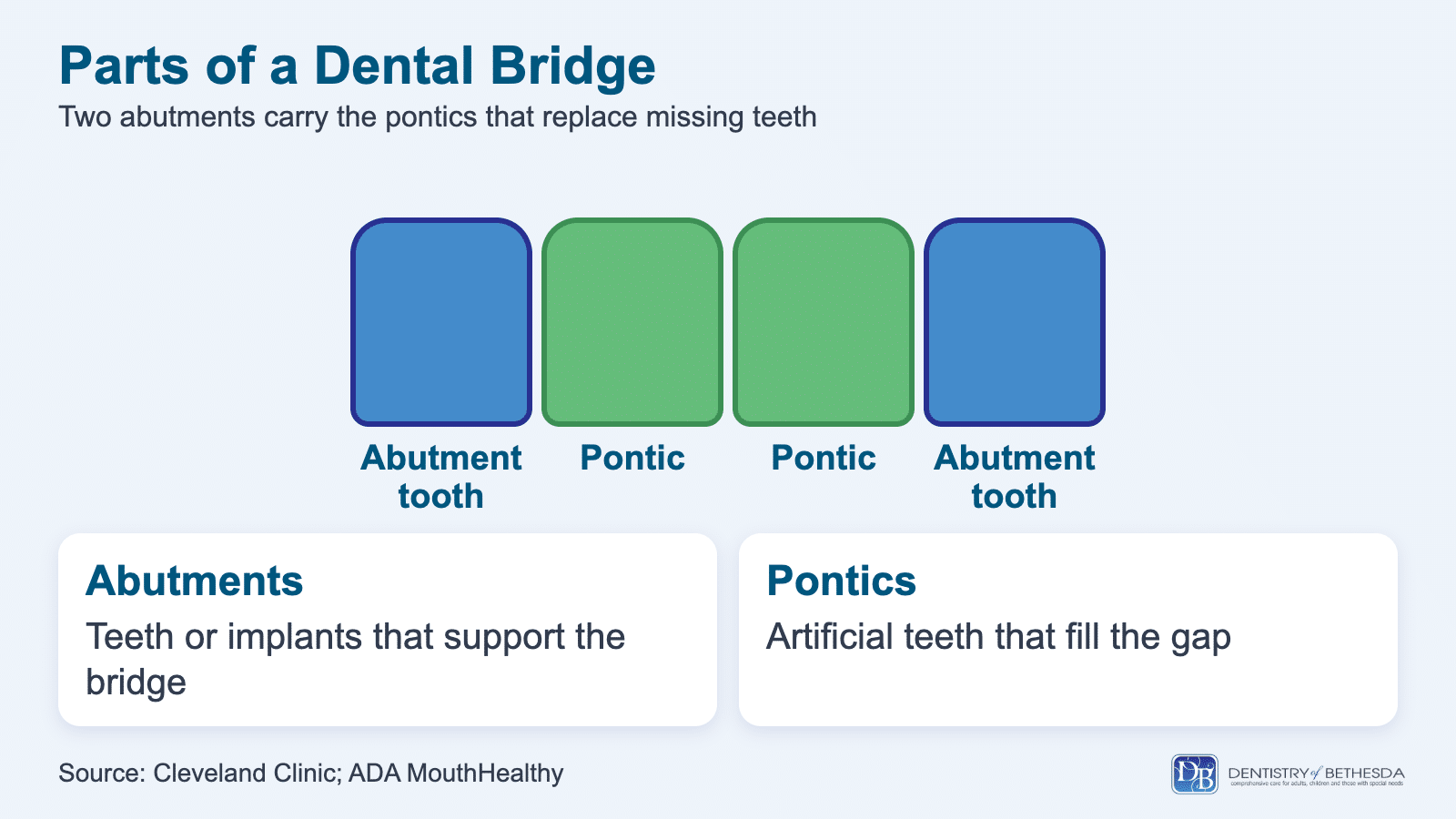
A dental bridge is a fixed prosthesis that joins artificial teeth to the teeth or implants beside a gap. The ADA calls it a fixed partial denture. Cleveland Clinic names two parts: abutments, which support the bridge, and pontics, the false teeth between them.
The ADA says bridges can be made from gold, alloys, porcelain, or a combination of these materials. Dr. Hornstein reviews each dental bridges plan against the health of the teeth beside the gap. The number of missing teeth and the size of the gap also shape the design.
The National Institute of Dental and Craniofacial Research (NIDCR) reports that adults 20 to 64 average 26 remaining teeth, down from 32. Seniors 65 and older average 21. Tooth loss of this kind is the reason bridges exist, and the next section covers how the designs differ.
The graphic below shows the two parts of a bridge and where each sits in the gap.
What Are the Types of Dental Bridge?
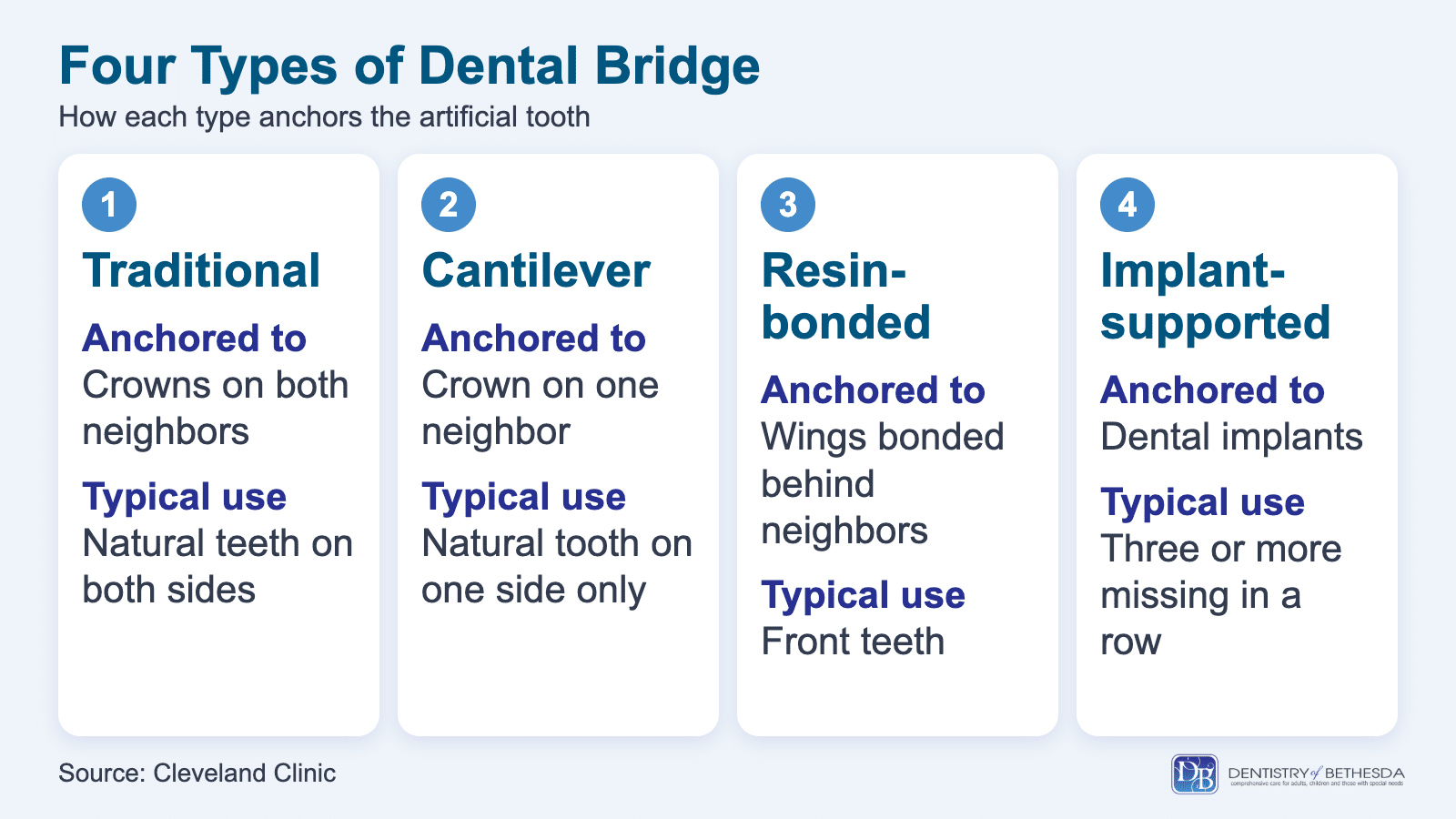
The types of dental bridge are traditional, cantilever, resin-bonded, and implant-supported, and each one anchors the artificial tooth in a different way. Cleveland Clinic lists these four as the main types. The anchor method is the main difference between them.
- A traditional dental bridge uses crowns on the teeth at both ends of the gap, with pontics between them.
- A cantilever bridge uses a crown on only one side, so the pontic extends across the gap.
- A resin-bonded bridge uses metal or porcelain wings bonded to the backs of the neighboring teeth.
- An implant-supported bridge rests on dental implants instead of natural teeth.
The table below compares the four types by anchor, usual position, and 10-year survival from published reviews. The reviews used different study designs, so the percentages show a general pattern and not a head-to-head test.
The figures come from reviews in Clinical Oral Implants Research in 2004 and 2017. Survival means the bridge stayed in place, and it does not mean the bridge needed no repair. The bonded type deserves a closer look next.
The cards below summarize how each type anchors the artificial tooth.
What Is a Bonded Dental Bridge?
A bonded dental bridge, also called a Maryland bridge, uses metal or porcelain wings glued behind neighboring teeth. Cleveland Clinic notes dentists typically use it for front teeth, because it cannot withstand back-tooth chewing forces.
A 2017 review in Clinical Oral Implants Research found 91.4% survival at 5 years and 82.9% at 10 years. Bridges with one retainer and bridges in the front of the mouth had higher survival.
How Does a Dental Bridge Work?
A dental bridge works by locking artificial teeth to anchors beside the gap and sharing chewing force with them. The abutments carry the load while the pontics replace the missing crowns.
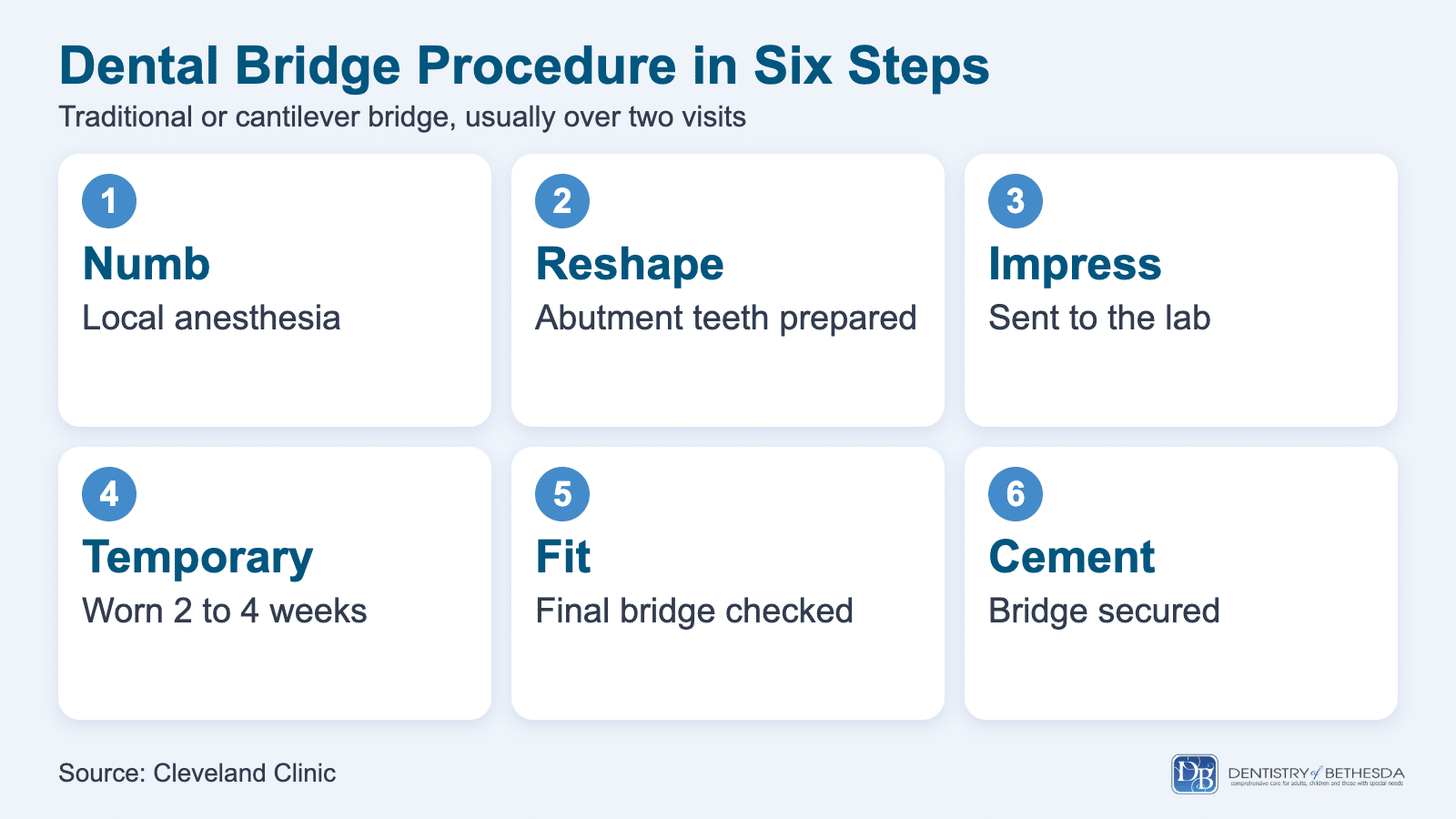
Cleveland Clinic describes a second office visit for a traditional or cantilever bridge. The steps below follow its description of the dental bridge procedure.
- The dentist numbs the area with local anesthesia.
- The dentist reshapes the abutment teeth by removing some enamel.
- The dentist takes impressions and sends them to a dental laboratory.
- The dentist places a temporary bridge while the laboratory makes the final one.
- At the second visit, the dentist removes the temporary bridge and checks the fit of the final bridge.
- The dentist cements the final bridge in place.
The graphic below shows the six steps in order.
Cleveland Clinic says the laboratory usually needs 2 to 4 weeks. An implant-supported bridge takes longer, because implants need 3 to 6 months on average to fuse with the jaw. Dr. Hornstein sets the timeline for each bridge treatment after the exam. Those steps also change the abutment teeth, and the next section explains how.
How Does a Dental Bridge Affect Teeth?
A dental bridge affects teeth by reshaping the abutment teeth for crowns and by closing the gap so neighbors stop drifting. Cleveland Clinic says the enamel removal is irreversible for traditional and cantilever bridges. Resin-bonded bridges prepare the teeth for wings instead of crowns.
Cleveland Clinic also says a bridge can prevent neighboring teeth from shifting into the gap. Good oral hygiene matters because plaque near the bridge can cause gum inflammation or cavities. The tooth loss effects explain why filling the gap protects the bite.
The abutment teeth must be strong enough to carry the bridge. Cleveland Clinic says decay or trauma on an abutment can weaken the bridge. A dentist checks the abutments for healthy enamel, gums, and bone before choosing this design.
What Material Is Used for a Dental Bridge?
The material used for a dental bridge depends on tooth position, bite, and appearance, because no single material wins in every case. Metal-ceramic and zirconia both performed well in a 2015 systematic review in Dental Materials.
That review reported a 5-year survival of 94.4% for metal-ceramic bridges and 90.4% for densely sintered zirconia. The authors found the difference was not statistically significant. Glass-infiltrated alumina bridges, at 86.2%, were the exception, and that group did differ significantly.
Knowing what is a dental bridge made of starts with the ADA list of gold, alloys, porcelain, and combinations. Porcelain blends with natural tooth color, while metal frameworks add strength. Our porcelain crowns work follows the same material logic for the anchor teeth.
How Long Does a Dental Bridge Last?
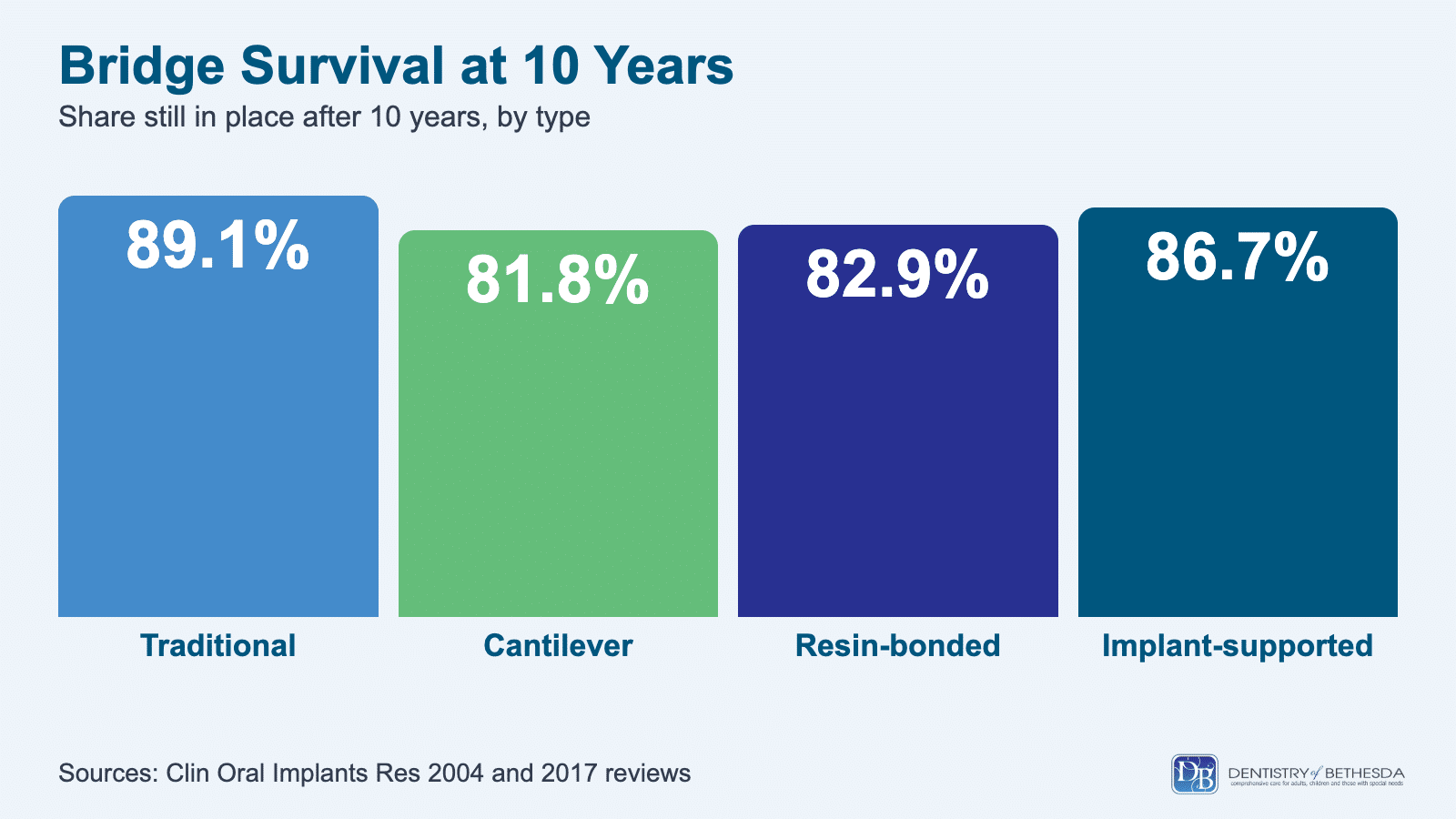
A dental bridge lasts 5 to 15 years on average, according to Cleveland Clinic, and some last longer with proper care. The 10-year survival of conventional bridges was 89.1% in a 2004 systematic review in Clinical Oral Implants Research.
That same review put the 10-year success rate, meaning no complications, at 71.1%. Success is a stricter measure than survival. A bridge can stay in place while needing a repair or a new cement seal along the way.
Cleveland Clinic says fixed bridges are called permanent only because a dentist alone can remove them. They still need replacement when wear or damage appears. Cleaning habits decide much of that timeline, and the next section lists them.
The chart below repeats the 10-year survival figures by bridge type.
How Do You Care for a Dental Bridge?
You care for a dental bridge by brushing, flossing, and cleaning under the pontic daily, as with natural teeth. Floss threaders or interproximal brushes reach the space under the bridge, according to Cleveland Clinic.
- Brush twice a day with a nonabrasive fluoride toothpaste.
- Clean under the bridge daily with floss threaders or interproximal brushes.
- Avoid extremely hard or chewy foods.
- Skip chewing on ice, pens, pencils, or fingernails.
- Keep up professional cleanings so plaque and tartar stay controlled.
Cleveland Clinic advises calling your dentist when a bridge feels loose or looks cracked. Pain when chewing, tooth sensitivity, and sore or bleeding gums are also reasons to call. Regular exams let the dentist catch these signs early.
What Else Should You Know About Dental Bridges?
What Is a Missing Tooth Clause in Dental Insurance?
A missing tooth clause in dental insurance is a plan rule excluding coverage for a tooth lost before the plan began. The tooth loss date versus the plan start date decides it, so a tooth lost after coverage began falls outside the clause.
Plans differ, and some carriers do not use the clause at all. The certificate of coverage is the controlling document. Ask the carrier in writing about the clause before treatment starts. Related questions appear in the guide to bridge insurance coverage.
Is a Dental Bridge Better Than an Implant?
A dental bridge is better than an implant only in some cases, since the neighboring teeth and bone decide. Cleveland Clinic says implants generally last much longer and help preserve existing bone.
A 2004 review found 95% survival at 5 years for implant-supported bridges and 86.7% at 10 years. A bridge avoids surgery and takes fewer months. Compare each path with the implant bridge option during an exam.
Can a Dental Bridge Be Removed?
A fixed dental bridge can only be removed by a dentist, according to the ADA. A removable bridge is a different appliance that you take out to clean. People who prefer a removable option can ask about removable dentures.
Can Children Get a Dental Bridge?
Children typically do not get a dental bridge, because Cleveland Clinic says dentists place them from age 17 or 18. A bonded bridge is an exception when a child loses a permanent tooth, though other options may work better.
How Much Does a Dental Bridge Cost?
Dental bridge cost varies by bridge type, materials, and the number of teeth replaced, and plan benefits change the amount you pay. Cost factors have their own guide. Read about bridge cost factors for what shapes the total.
Patients who want to see outcomes can review bridge results from a related guide, which covers the options for each case. That guide also compares the bridge choices a dentist may discuss.
How Does Dentistry of Bethesda Help With a Dental Bridge?
Dentistry of Bethesda helps with a dental bridge by examining the gap, checking the supporting teeth, and explaining each option. Dr. Hornstein, a Master of the Academy of General Dentistry, leads the exam. We explain every finding in plain terms before planning any treatment. We also discuss replacement options alongside bridges.
Our team also reviews gum health, because healthy gums support any bridge. Each plan starts from the exam findings and the patient’s own goals. After placement, we schedule regular checkups to monitor the bridge.
Patients asking what is a dental bridge in their own case, or with a loose bridge, can call us at (301) 530-2700. Meet Dr. Hornstein’s team online and plan an exam.