

Low cost dental insurance usually means a dental HMO or a discount plan. The National Association of Dental Plans (NADP) puts individual dental HMO premiums at $15.14 per month. Individual PPO plans average $41.76 per month. Most plans cover preventive visits in full, while fillings and crowns carry cost sharing. Comparing waiting periods and annual maximums shows which plan fits.
Key Takeaways
- NADP reports average individual premiums of $15.14 per month for DHMO plans and $41.76 per month for DPPO plans.
- Most plans cover preventive care at 100%, basic care near 80%, and major care near 50%, according to NADP.
- The ADA reports that only 3.4% of patients reach their annual maximum.
- Separate dental plans can have waiting periods, and premiums are due during the wait, per HealthCare.gov.
- Dental schools, community health centers, and state Medicaid programs offer other low-cost routes.
What Is Low Cost Dental Insurance?
Low cost dental insurance is a dental benefit plan with a monthly premium at the low end of the market. Most low-premium plans are dental HMOs or small-network preferred provider plans. A plan pays a set share of covered services. Discount plans charge a fee instead and are not insurance.
NADP explains that a dental HMO uses fixed copayments and a closed network of dentists. A dental PPO uses percentages and lets members see dentists outside the network at lower coverage. A first appointment is a good time to ask which plans a dental office accepts.
What Is the Difference Between a Dental Plan and a Discount Plan?
A dental plan and a discount plan differ in who pays for care. A dental plan pays part of each claim, while a discount plan pays nothing. Discount plans only lower fees at network dentists, according to NADP. Members still pay the full discounted price at each visit.
The monthly or yearly fee for a discount plan is lower than a DHMO or DPPO premium, NADP notes. No claims, deductibles, or annual maximums apply. That structure makes the next question important, which is what the premium itself costs.
How Much Does Dental Insurance Cost Per Month?
Dental insurance costs about $15 to $42 per month for an individual plan, based on NADP averages. DHMO plans average $15.14 and DPPO plans average $41.76 per month. The cost of dental insurance rises with a larger network, higher coverage percentages, and a higher annual maximum.
The table below compares the plan types that most buyers see. Each premium figure comes from NADP, which cites its 2024 Dental Benefits Report.
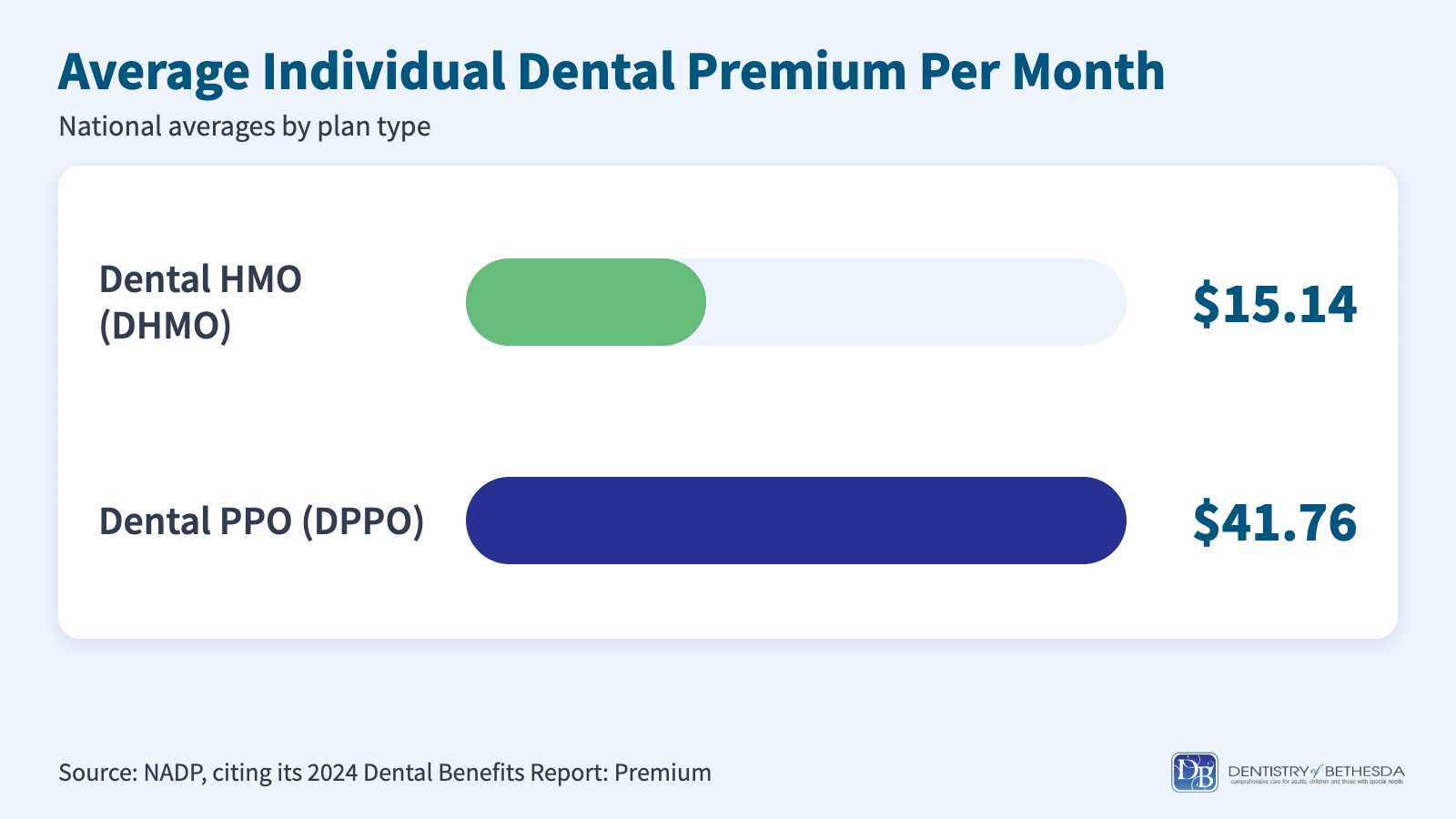
The chart above shows the same NADP averages. The figures show that plan type changes the premium more than any other choice. Understanding the average helps answer the next question.
What Is the Average Cost of Dental Insurance?
The average cost of dental insurance for an individual is $15.14 per month for a DHMO, according to NADP. A DPPO averages $41.76 per month. The dental insurance average cost per month therefore differs by plan type. Employer plans cost members less, because employers pay part of the premium.
NADP notes that individual policies generally cost more than group policies. The dental insurance average cost per month for a family grows with each covered member. Premium is only one cost, since deductibles and coinsurance add to it.
How Much Is a Good Dental Insurance Plan Per Month?
A good dental insurance plan costs the premium that fits the care you expect to use. Fit matters more than price, because a low premium with a long waiting period may cost more. The dental insurance monthly cost should be weighed against coverage percentages and the annual maximum.
A plan for routine visits can use the lower DHMO premium. A plan for fillings or crowns may justify the higher DPPO premium. The cost of dental insurance per month then connects to what each plan pays.
Is $30 a Month a Lot for Dental Insurance?
Thirty dollars a month for dental insurance falls between the NADP averages of $15.14 for a DHMO and $41.76 for a DPPO. That amount is $360 per year, based on simple multiplication. A plan at that price should be judged against the care you plan to use.
What Do Low Cost Dental Plans Cover?
Low cost dental plans cover preventive care at the highest rate. Basic care gets a middle rate, and major care gets the lowest rate. NADP lists 100%, 80%, and 50% as typical in-network shares. Copayments replace percentages in a DHMO.
- Preventive care, such as exams, X-rays, and sealants, is usually covered at 100%.
- Basic care, such as fillings, extractions, root canals, and gum treatment, is typically covered at about 80% in network.
- Major care, such as crowns, bridges, inlays, and dentures, is usually covered at about 50%.
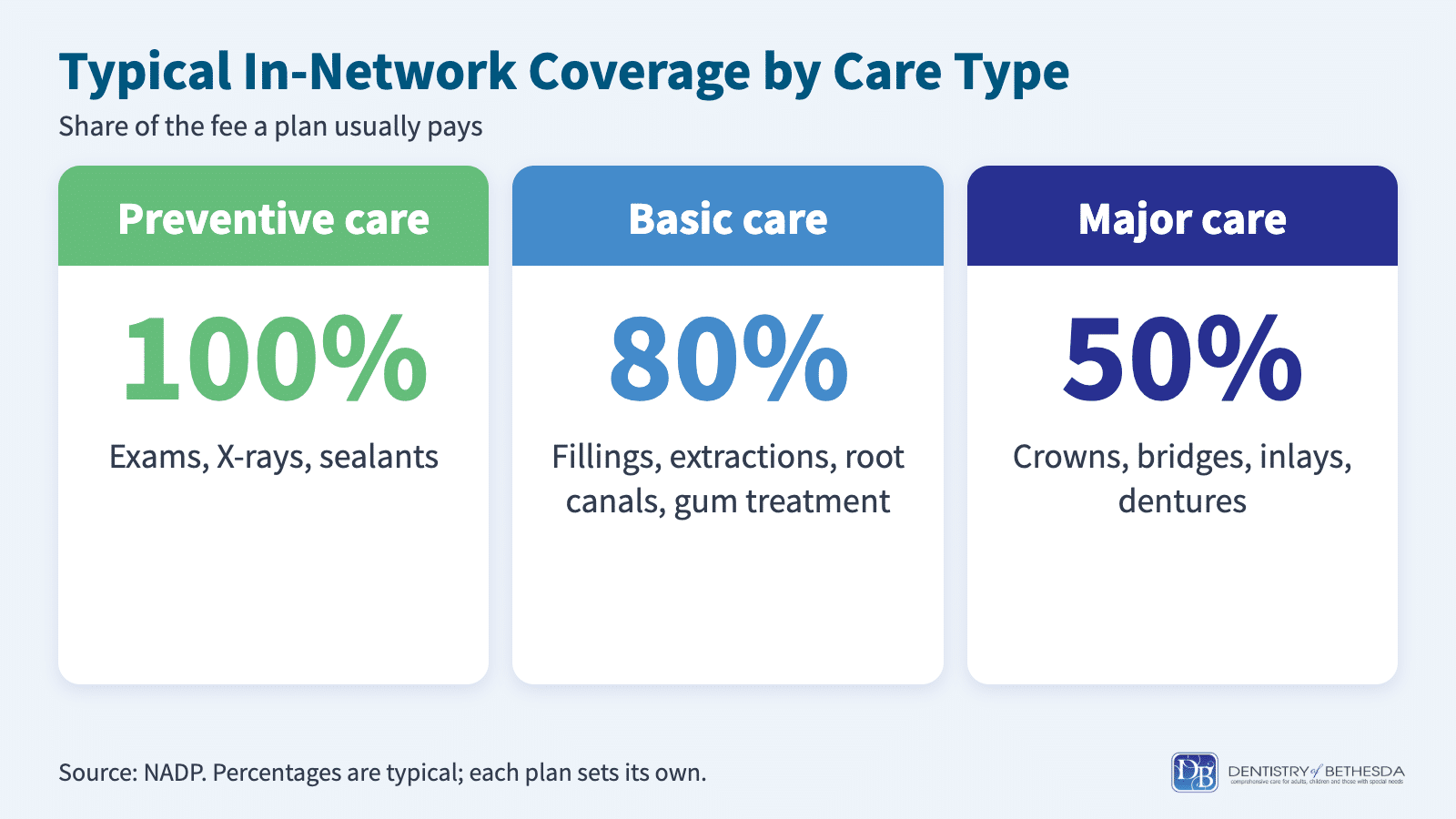
The cards above show the NADP tiers at a glance. NADP adds that PPO deductibles usually run between $50 and $100. Root canals sometimes sit in the major category instead. Reading the benefit summary shows where each service falls, starting with the top tier.
Is There Any Dental Insurance That Covers 100%?
Yes, dental insurance covers 100% of preventive care on most plans, but not of basic or major care. NADP states that most plans pay in full for exams, X-rays, and sealants. Fillings and crowns carry cost sharing under the same plans.
Exam and cleaning visits keep teeth healthy, so cleaning services make good use of that preventive benefit. Plans may still limit how often each visit is covered.
Is There a Dental Insurance That Pays for Everything?
No dental insurance pays for everything, because every plan uses cost sharing, exclusions, and an annual maximum. Annual maximums cap yearly payments, according to the American Dental Association (ADA). The ADA reports that 48.2% of in-network maximums fall between $1,500 and $2,500.
The same ADA analysis shows that 3.4% of patients reach the annual maximum. A cap therefore affects few patients each year. Cost sharing on major work matters more for most budgets.
How Much Do Dental X Rays Cost With Insurance?
The cost of dental X-rays with insurance is usually $0 for in-network preventive imaging. NADP reports that most plans cover X-rays at 100%. Preventive X-rays are usually covered in full within frequency limits. Diagnostic X-rays for a specific problem may fall under basic care instead.
The question of how much do dental x rays cost with insurance therefore depends on the plan category and the frequency limit. Ask the insurer how often it pays for each image type. A plan may pay for one set of bitewings per year.
Are Yearly Dental X-Rays Really Necessary?
Yearly dental X-rays are not required for everyone, because the ADA states that no one-size-fits-all interval exists. Dentists set the interval from oral health, age, disease risk, and symptoms. Some patients need images more often than others.
The ADA also reports that dental imaging accounts for less than 1% of the collective annual radiation dose. The mean US dose from all sources is 6.2 millisieverts per year, according to the ADA citing the NCRP. Your dentist can explain the interval for your mouth.
How Much Does a Dental Crown Cost With Insurance?
The cost of a dental crown with insurance is usually about half the fee. NADP lists crowns as major care covered at about 50%. You pay the remaining share plus any deductible. The annual maximum applies to the plan payment.
The question of how much does a dental crown cost with insurance has a different answer for each office and plan. A crown treatment estimate from the dentist’s office lists the exact fee and the plan share. Plans may also apply a waiting period to major care.
How Much Does a Dental Implant Cost With Insurance?
The dental implant cost with insurance depends on whether the plan covers implants at all. NADP reports that some carriers now cover implants as major care, often with a frequency limit such as one per year. Many plans exclude implants entirely.
The question of how much does a dental implant cost with insurance starts with the benefit summary. Each part of treatment, including the extraction, the post, and the crown, may sit on a separate line. Patients who want to compare an implant treatment estimate against plan limits can request a written breakdown.
Is It Cheaper to Get Dental Insurance or Pay Out of Pocket?
Dental insurance is cheaper than paying out of pocket when the plan pays more in benefits than the yearly premium costs. The break-even point is the premium total compared with covered care. A $41.76 monthly DPPO premium totals about $501 per year.
A patient who uses only two exams and cleanings may see little gain from a PPO premium. A patient who needs fillings and a crown can recover the premium faster. Plans that pay 80% and 50% only help when treatment is needed.
What Do People Do That Don’t Have Dental Insurance?
People without dental insurance use dental schools, community health centers, discount plans, payment plans, and public programs. Several paths exist for care without a commercial plan. The ADA lists these options on its MouthHealthy site.
Will a Dentist Treat You Without Insurance?
Yes, a dentist will treat you without insurance, and many offices accept patients who pay for visits directly. Insurance is not required to book a visit. Ask the office how it handles payment, estimates, and plan questions before treatment begins.
Can I Buy Dental Insurance on My Own?
Yes, you can buy dental insurance on your own through the Health Insurance Marketplace or directly from a dental carrier. Individual plans are available without an employer. HealthCare.gov states that Marketplace shoppers can add a stand-alone dental plan or pick a health plan that includes dental benefits.
The premium for a separate plan is added to the health plan premium. NADP notes that individual policies generally cost more than group policies. The next question is how soon a new plan starts to pay.
Can I Buy Dental Insurance and Use It Immediately?
Some dental plans can be used immediately, but separate dental plans can have waiting periods for adults. Waiting periods delay coverage, according to HealthCare.gov. A plan with a waiting period does not cover services until the wait ends, and premiums are due during that time.
Preventive care often has no wait, while major care often does. Confirm the waiting period for each category in writing. A dental HMO may cut the wait because NADP describes fixed copayments and a closed network.
How Do You Compare Low Cost Dental Plans?
To compare low cost dental plans, line up premium, copayments, waiting periods, network, and annual maximum for each option. Follow these steps in order.
- Write down the monthly premium and multiply it by 12.
- Check the coverage percentage or copayment for preventive, basic, and major care.
- Look up the waiting period for each care category.
- Confirm that your dentist is in the plan network.
- Compare the annual maximum and the deductible.
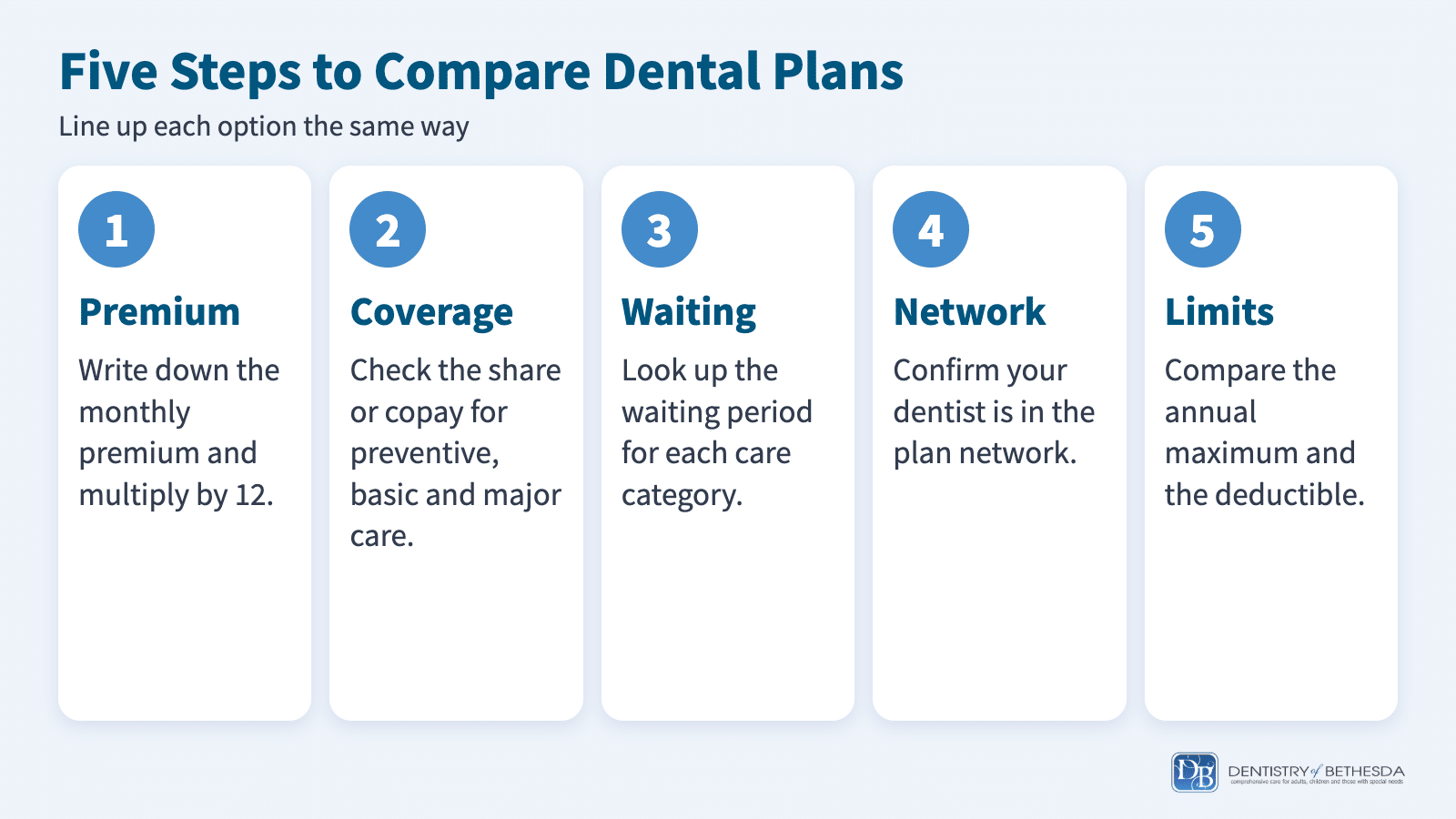
The graphic above repeats the five steps. Each step shows a cost that the premium alone hides. The ADA reports that 32.8% of in-network maximums fall between $1,000 and $1,500, so the maximum differs by plan. A written estimate from the office confirms the final numbers.
What’s the Best and Cheapest Dental Insurance?
The cheapest dental insurance is usually a dental HMO. NADP reports that DHMO premiums are the lowest among insured dental benefit products. Low premium is not the same as right fit, so network access and waiting periods also matter. No single plan suits every patient.
What Are Other Low Cost Ways to Get Dental Care?
Other low cost ways to get dental care include dental school clinics, federally qualified health centers, nonprofit programs, and Medicaid. The ADA lists these routes on its MouthHealthy site. Each route has its own eligibility rules.
- Dental school clinics may offer reduced rates, and many limit charges to the cost of materials and equipment, per the ADA.
- Federally qualified health centers offer sliding-scale dental services based on income, regardless of ability to pay.
- Medicaid and the Children’s Health Insurance Program cover children, and each state sets adult benefits.
- Some state programs, such as Maryland Medicaid, cover adults 21 and older. Maryland charges no copays and sets no annual maximum, but excludes new dentures.
Original Medicare does not cover most dental services, including dentures, according to Medicare.gov. Families can review children’s dentistry options alongside Medicaid.
How Can I Get Help With My Dental Costs?
Help with dental costs comes from dental schools, community health centers, nonprofit programs, payment plans, and Medicaid. Ask the dental office first, because the ADA lists asking your dentist as the first option. Many offices explain payment choices before treatment.
How to Get Dental Insurance With No Income?
Dental insurance with no income comes through Medicaid, which has no premiums for covered services in many state programs. Apply through your state Medicaid agency to check eligibility. Adults without Medicaid can use a Marketplace plan, where income rules differ.
What Is the Cheapest Way to Get Dental Care?
The cheapest way to get dental care is usually a sliding-scale health center, a dental school clinic, or Medicaid. Income decides the lowest cost at health centers, according to the ADA. Dental schools may charge only for materials and equipment.
What If I Have Bad Teeth and No Money?
A person with bad teeth and no money can still get care through health centers, dental schools, and public programs. Call a health center first to ask about sliding-scale visits. Severe pain, swelling, or fever needs prompt attention from a dentist or urgent care.
What Else Should You Know About Low Cost Dental Insurance?
Do HSAs and FSAs Help Pay for Dental Care?
Yes, health savings accounts and health flexible spending accounts can help pay dental costs. Qualified expenses are those that generally qualify for the medical and dental expense deduction, according to IRS Publication 969. Check plan rules for eligible items.
How Often Do Plans Pay for Cleanings and Exams?
Plans usually pay for preventive visits on a set schedule, and the frequency limit appears in the benefit summary. Frequency limits vary by carrier. NADP reports that most plans pay preventive care in full. Routine care in general and preventive dentistry keeps problems small.
Does Dental Insurance Cover Fillings and Root Canals?
Yes, dental insurance usually covers fillings and root canals as basic care at about 80% in network, according to NADP. Some plans move root canals to the major tier at 50%. Check the benefit summary for the exact category of each service.
Does Dental Insurance Cover Dental Bridges and Dentures?
Dental insurance may cover bridges and dentures as major care at about 50%, according to NADP. Annual maximums limit the total payment. Patients can compare insurance for bridges before choosing a plan.
How Does Dentistry of Bethesda Help With Dental Costs?
We help patients understand dental costs by reviewing recommended treatment, explaining each step, and answering questions about plans before care begins. Clear estimates let patients compare treatment against plan limits. Patients can become a patient and ask our team about coverage questions.
Dr. Hornstein reviews each treatment plan with the patient. Families can find out about our practice and the care we provide.