

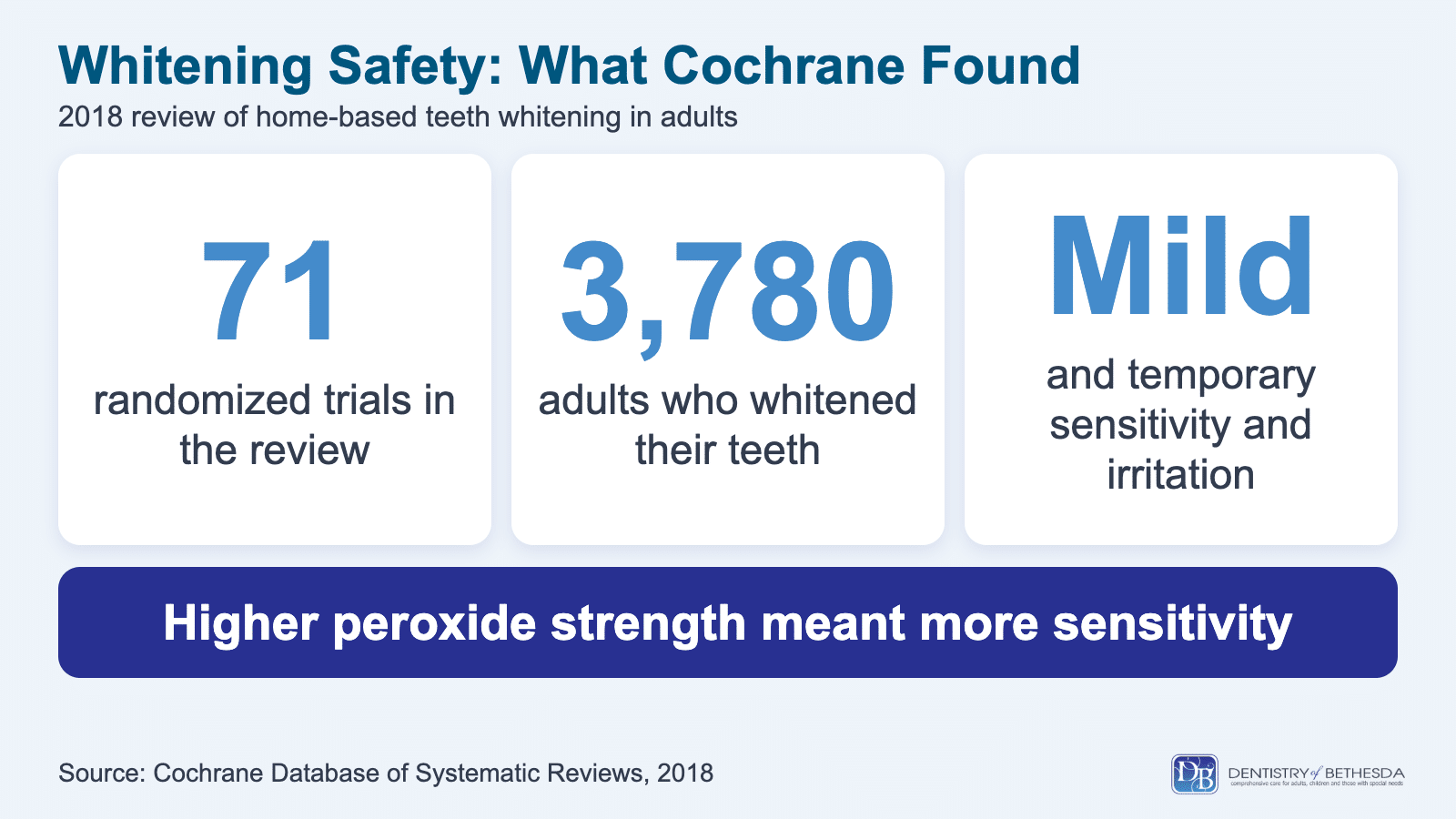
Yes, teeth whitening is safe when peroxide products are used as directed on healthy natural teeth. A 2018 Cochrane review of 71 trials and 3,780 adults named sensitivity and oral irritation as the most common side effects. The review described both effects as mild and temporary. A dental exam before bleaching checks for cavities, gum disease, and worn enamel, which keeps the risk low.
Key Takeaways
- Hydrogen peroxide and carbamide peroxide whitening is safe and effective when manufacturer directions are followed.
- Temporary tooth sensitivity and gum irritation are the most common side effects, according to Cochrane.
- Whitening does not change crowns, veneers, caps, or fillings, and gray teeth may not respond.
- No studies exist on whitening safety during pregnancy, so dentists plan it for after pregnancy and breastfeeding.
- A dentist exam first catches cavities, gum disease, and exposed roots that make whitening painful.
Is Teeth Whitening Safe?
Teeth whitening is safe when hydrogen peroxide or carbamide peroxide products are used as directed on healthy natural teeth. Following the manufacturer directions is the safety rule. A 2014 clinical review in the Journal of Evidence-Based Dental Practice found this for both peroxides.
The answer to “is teeth whitening safe” changes with the dose, the contact time, and the condition of the mouth. Dr. Hornstein’s office offers professional whitening only after an exam confirms the teeth and gums are healthy.
What Are the Risks of Teeth Whitening?
The risks of teeth whitening are temporary tooth sensitivity and mild gum irritation. Both risks rise with peroxide strength and treatment time, according to the 2014 clinical review. The Cochrane review found the same pattern, with higher concentrations causing more sensitivity.
The American Dental Association (ADA) explains the cause on its MouthHealthy site. Peroxide passes through enamel to the dentin and irritates the tooth nerve. The list below names each risk in plain terms.
- Tooth sensitivity appears during treatment and fades after it stops.
- Gum irritation follows contact between bleaching gel and soft tissue.
- Surface changes to enamel appeared in lab tests of aggressive, high-concentration products.
- Crowns, veneers, and fillings stay the same color, so uneven shades can result.
The graphic below shows what the Cochrane review covered and what it found.
Those findings leave one common worry about the tooth surface itself.
Does Teeth Whitening Damage Enamel?
Teeth whitening changes enamel only under aggressive conditions, based on lab findings in a 2014 clinical review. Aggressive office products with high peroxide levels softened and roughened enamel in laboratory tests. The review also said following manufacturer directions keeps whitening safe.
The ADA adds that overuse of whiteners can damage enamel or gums. Enamel safe teeth whitening means using the labeled amount, the labeled time, and no abrasive home mixtures. A 2017 JADA review of charcoal dentifrices found insufficient data to support safety and effectiveness claims.
Do Dentists Recommend Teeth Whitening?
Dentists recommend teeth whitening after an exam shows healthy teeth and gums. The ADA advises talking to a dentist before whitening because whiteners do not correct every type of discoloration. The Opalescence whitening brand tells users with gum disease, worn enamel, cavities, or exposed roots to talk to a dentist first.
A routine dental checkup finds those conditions before bleaching starts. Whitening an untreated cavity or inflamed gums raises discomfort. Dr. Hornstein treats gum problems first.
What Is the Healthiest Way to Whiten My Teeth?
The healthiest way to whiten teeth is a dentist-guided plan using peroxide products at the directed strength. Safe teeth whitening options share three traits: a dental exam first, labeled peroxide levels, and a set time limit. The ADA names four routes: stain-removal toothpaste, over-the-counter bleaching, dentist take-home trays, and in-office bleaching.
The table below compares those safe teeth whitening methods by peroxide level and by who applies the product.
The strengths come from the products listed in the 2014 clinical review and the ADA MouthHealthy guide. Each method has its own safety questions.
Is Professional Teeth Whitening Safe?
Professional teeth whitening is safe when a dentist checks the teeth first and protects the gums. The ADA says the dentist applies a protective gel or rubber shield before the bleach. Sensitivity can still occur, and the 2014 clinical review found home bleaching caused less sensitivity than in-office bleaching.
The same review covered a 90-patient trial where a 10% carbamide peroxide tray matched 35% hydrogen peroxide in whitening. The review found light activation did not change the rate of bleaching or the sensitivity. Dr. Hornstein explains the difference between in-office whitening and take-home trays during the exam.
What Is the Safest Teeth Whitening Method at Home?
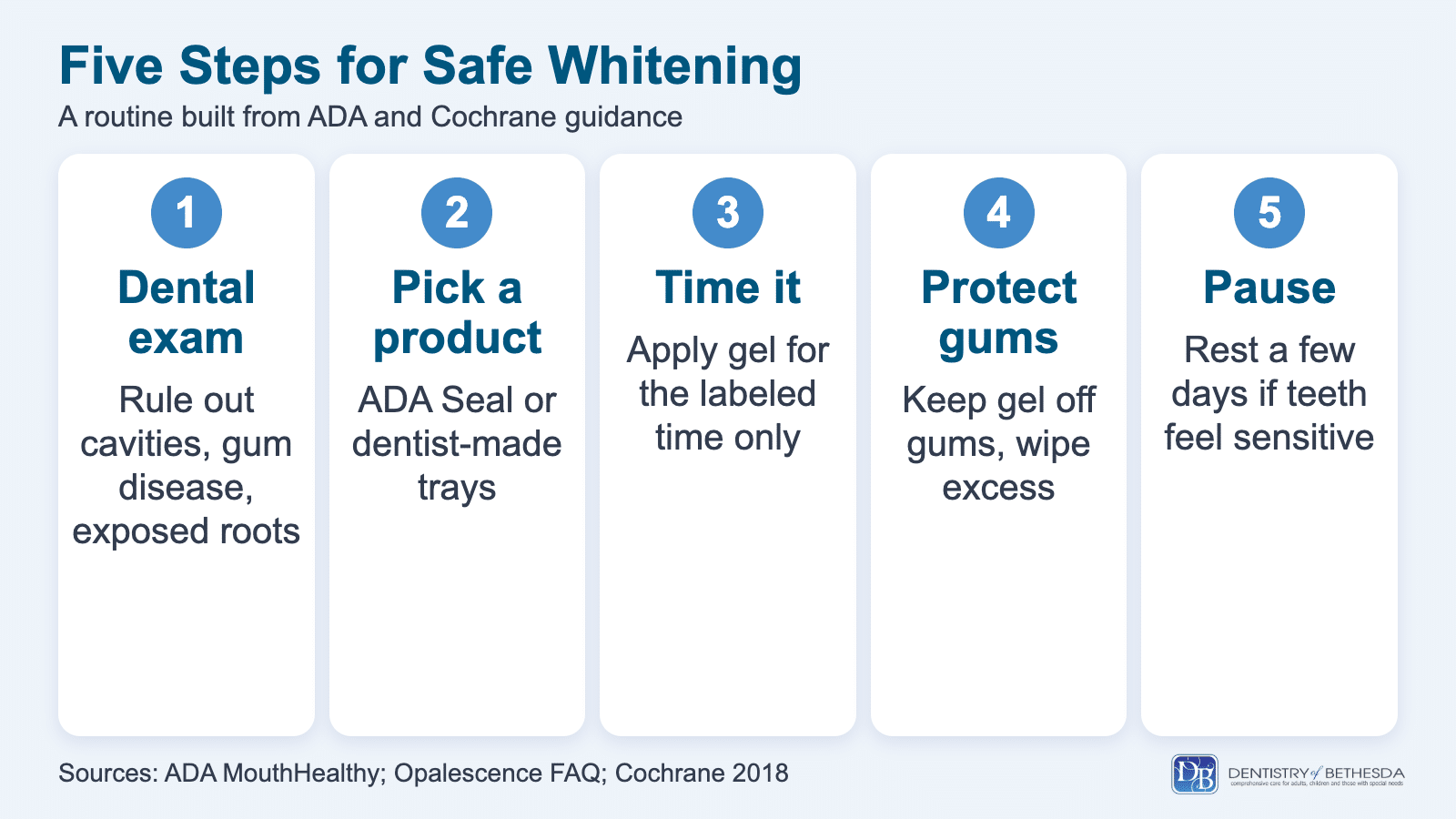
Safe teeth whitening at home means a product with the ADA Seal of Acceptance or dentist-made trays, used as directed. The ADA states the Seal shows a bleaching product was tested as safe and effective on natural teeth. The numbered steps below cover the routine.
- Book a dental exam to rule out cavities, gum disease, and exposed roots.
- Choose a product with the ADA Seal or trays made by your dentist.
- Apply the gel for the labeled time only.
- Keep gel off the gums and wipe away any excess.
- Pause for a few days if sensitivity appears, as the Opalescence FAQ advises.
The graphic below shows the same routine as a checklist. Patients can compare at-home whitening choices with the dentist before buying.
Are Teeth Whitening Pens Safe?
Teeth whitening pens are safe when the paint-on gel contains hydrogen peroxide or carbamide peroxide and the label is followed. The Cochrane review included hydrogen peroxide and carbamide peroxide paint-on gels. The review reported the same mild, temporary sensitivity and irritation as the tray and strip products.
Pens lack the barrier a custom tray provides, so gel can touch the gums. The ADA names poor application as a cause of gum irritation, so a steady hand and a light coat matter.
Is 6% Hydrogen Peroxide Safe for Teeth Whitening?
Yes, 6% hydrogen peroxide is safe for teeth whitening when used as labeled. Whitening strips at 6.5% hydrogen peroxide appear in the 2014 clinical review among the products studied. The Cochrane review found sensitivity rises as the concentration rises.
A lower strength means fewer sensitivity complaints, and a dentist can match the strength to the stain.
Is 6% or 16% Teeth Whitening Stronger?
The 16% label is not automatically stronger than the 6% label. Carbamide peroxide breaks down in water to release hydrogen peroxide, according to the 2014 clinical review. A 16% carbamide peroxide gel and a 6% hydrogen peroxide gel name different compounds.
When two products name the same compound, the higher percentage is the stronger gel. A dentist can read the label and explain the difference.
Is Opalescence Teeth Whitening Safe?
Opalescence teeth whitening is a peroxide-based product line, and its maker states the products are tested for safety under international standards. The maker’s FAQ also says the products carry no ADA Seal. The FAQ advises children under 12, pregnant users, and breastfeeding users not to use them.
The same FAQ tells users with sensitivity to take a few days off between trays. Dentist-supplied products follow the same directions, and the dentist sets the schedule.
Is Teeth Whitening Safe During Pregnancy?
Teeth whitening during pregnancy has no safety studies behind it, so dentists plan it for after delivery. The Opalescence FAQ states that no studies exist and cites an ADA suggestion that clinicians may consider deferring whitening during pregnancy. Pregnancy safe teeth whitening has no tested method.
Breastfeeding safe teeth whitening has the same gap in the research. The same maker advises breastfeeding users and users in fertility treatment to skip whitening products. A dentist can schedule whitening for after pregnancy and weaning and can answer questions about timing.
What Kind of Teeth Cannot Be Whitened?
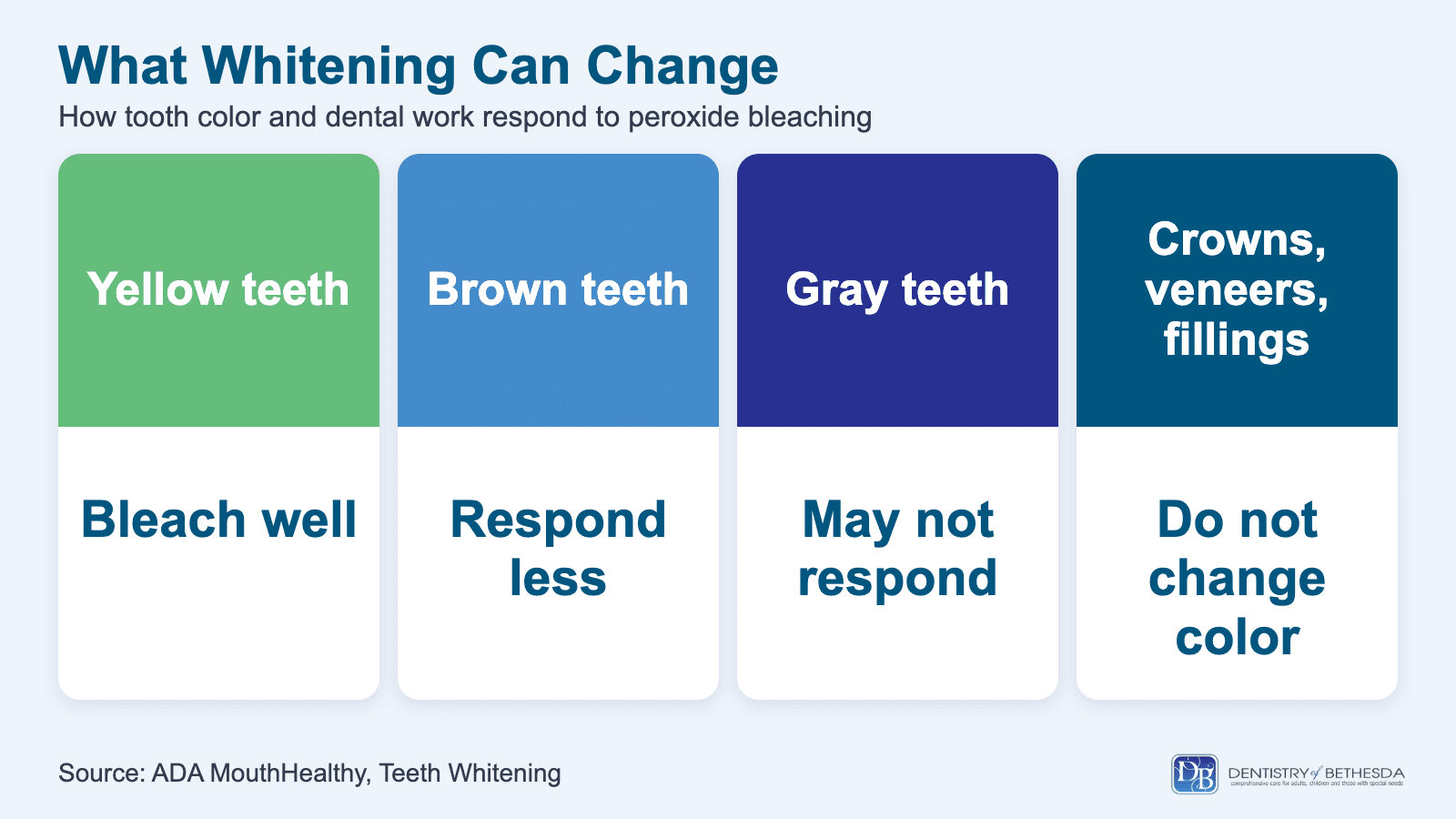
Teeth with crowns, veneers, caps, or fillings cannot be whitened, because bleach affects only natural tooth structure. The ADA also states that gray teeth may not bleach at all and brown teeth may respond less than yellow teeth. Discoloration from medications or a tooth injury does not respond well either.
Restorations keep their color, so a whitened smile can look uneven beside them. Dr. Hornstein can match a crown with inlays and onlays or veneers after whitening sets the natural shade. The graphic below summarizes which stains respond.
What Disqualifies You From Teeth Whitening?
Cavities, gum disease, worn enamel, and exposed roots disqualify you from whitening until a dentist treats them. The Opalescence FAQ names those four conditions. The 2014 clinical review found restored teeth had significantly more sensitivity pain in a trial of in-office bleaching.
Pregnancy, breastfeeding, and age under 12 also rule out the Opalescence products, per the maker. Teens need a dentist’s guidance before any bleaching. A cosmetic gap in a tooth can be addressed through tooth bonding instead.
How Long Does Teeth Whitening Last?
Teeth whitening lasts until new stains build up, and a lab study found yellowness did not return to baseline within 1 year. The 2014 clinical review reported that lab color-stability result. The review noted lightness was not fully stable over time.
Habits set the pace in real mouths. Coffee, tea, red wine, and tobacco add pigments called chromogens to enamel, as the ADA explains. Dr. Hornstein reviews whitening over time with patients during the consult.
Why Did My Teeth Go Back to Yellow After Whitening?
Teeth go back to yellow after whitening because new stains accumulate and age thins the enamel over the yellow dentin. The ADA names food, drink, tobacco, and aging as the main causes of tooth color change. Dentin shows through as enamel wears thinner.
Brushing and a routine cleaning remove surface stain. A dentist can plan whitening aftercare that limits the pigments reaching fresh enamel.
What Else Should You Know About Teeth Whitening Safety?
Can Yellow Teeth Become White Again?
Yes, yellow teeth can become whiter with bleaching because yellow stains bleach well, according to the ADA. Results vary with the cause of the stain. A dentist identifies whether the yellow color is surface stain or deeper dentin color.
How Many Times Can Teeth Be Whitened?
No source sets a fixed number of times teeth can be whitened. The Opalescence FAQ says a user may continue until the desired shade is reached if no sensitivity appears. Cochrane trials ran from 2 weeks to 6 months, so a dentist sets the schedule.
Can 60 Year Old Teeth Be Whitened?
Yes, 60 year old teeth can be whitened when the teeth and gums are healthy. The ADA notes aging thins enamel and lets yellow dentin show, and yellow teeth bleach well. Older patients may have crowns and fillings, which stay the same color. Our geriatric dentistry care includes this exam.
Is There a Natural Teeth Whitener That Works?
No natural teeth whitener has proven results. The JADA 2017 review found insufficient data to support charcoal dentifrice claims. Peroxide-based products and stain-removal toothpaste have the research behind them.
Does Hydrogen Peroxide Whiten Teeth?
Yes, hydrogen peroxide whitens teeth by breaking stain molecules into smaller pieces, according to the ADA. Whitening products deliver it as hydrogen peroxide or carbamide peroxide. Products are formulated for tooth contact at set strengths.
Do Whitening Lights Make Whitening Safer or Stronger?
No, whitening lights do not make whitening safer or stronger. The 2014 clinical review found light did not change the rate of bleaching, the sensitivity, or how long results last. A meta-analysis cited there found light raised sensitivity risk during in-office bleaching.
Frequently Asked Questions
Is There a Downside to Teeth Whitening?
The downsides of teeth whitening are temporary sensitivity, gum irritation, and uneven color beside crowns or fillings. The Cochrane review rated the side effects mild and temporary. Overuse raises the risk, per the ADA.
Is Teeth Whitening Painful?
Teeth whitening is painful only when sensitivity or gum irritation develops. The ADA says the sensitivity is temporary in most cases and a treatment can be delayed and tried again. A dentist can adjust the strength or the schedule.
Can Whitening Make Gums Sore?
Yes, whitening gel that touches the gums can make them sore. The ADA ties gum irritation to poor application and ill-fitting trays. Custom trays made by a dentist reduce contact.
What Causes Yellow Teeth?
Yellow teeth come from food and drink pigments, tobacco, aging, injury, and certain medications, according to the ADA. Tetracycline-class antibiotics taken while teeth form can discolor adult teeth. A dental exam identifies the cause.
How Does Dentistry of Bethesda Help With Teeth Whitening?
Dentistry of Bethesda helps with teeth whitening through an exam, a clear plan, and shade matching with existing dental work. Dr. Spencer Hornstein reviews stain type, gum health, and restorations before recommending a method. We explain the strength and schedule so patients know what to expect.
Patients who want a safe plan can review the options on our teeth whitening services page. Questions about sensitivity, pregnancy timing, or crowns are welcome before treatment begins. Our staff answers every question during the exam and explains the strength and schedule in plain terms.
The Dr. Hornstein’s dentistry team also cares for families and seniors in the community.