

Gingivitis plaque on teeth is the earliest and mildest stage of gum disease, and it is reversible. According to the CDC, bacteria in plaque inflame the gums, which turn red, swell, and may bleed. Plaque that is not removed hardens into tartar, and only a dentist or hygienist can remove tartar. Daily brushing and flossing reverse early gingivitis, and the ADA advises brushing for 2 minutes twice a day.
Key Takeaways
- Gingivitis is the mildest form of gum disease, and the CDC says it is reversible with routine oral hygiene and professional cleanings.
- Plaque is a removable bacterial film, while tartar needs removal by a dentist or hygienist.
- The ADA advises brushing twice a day for two minutes and cleaning between teeth daily.
- A mouth rinse adds to brushing and flossing and never replaces them, according to the ADA.
- Gingivitis that continues can progress to periodontitis, which causes bone loss and can be slowed but not reversed.
- A dentist can measure gum pockets, where 1 to 3 millimeters is the healthy range.
What Is Gingivitis Plaque on Teeth?
Gingivitis plaque on teeth is a sticky bacterial film that irritates the gums and causes gingivitis, the mildest gum disease. The CDC describes plaque as a removable film on tooth surfaces. Brushing and flossing remove plaque before it hardens.
Dr. Hornstein treats the bacterial buildup behind early gum inflammation through periodontal treatment when home care is not enough.
Plaque forms constantly, so the next question is what separates plaque from tartar.
What Is the Difference Between Plaque and Tartar?
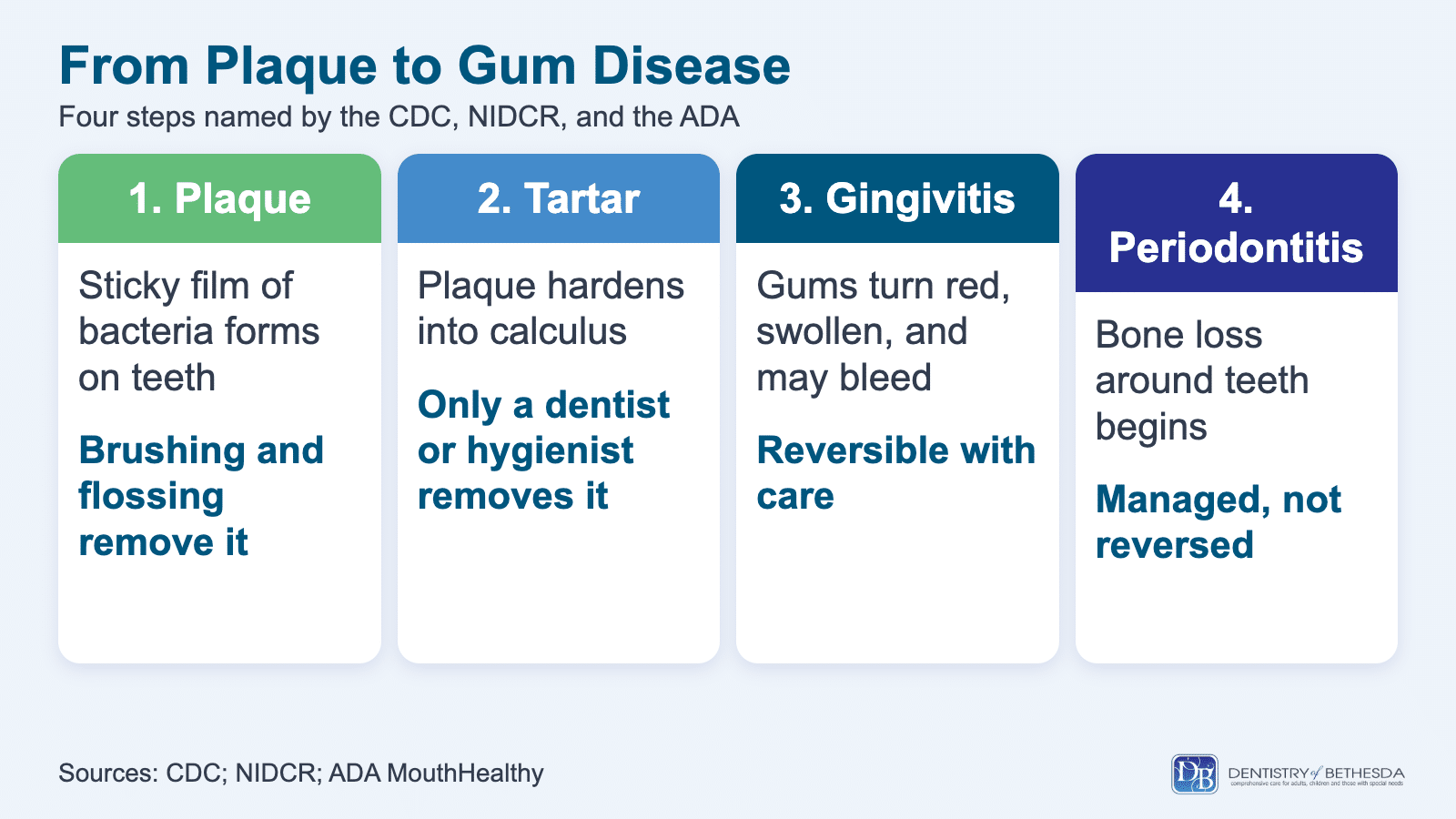
Plaque is a soft bacterial film that brushing removes, while tartar is hardened plaque that only a professional cleaning removes. The CDC says brushing cannot remove tartar. NIDCR agrees that only a dentist or dental hygienist can remove it.
The graphic below shows how plaque moves through four steps from buildup to periodontitis.
A regular hygiene visit removes tartar that home care cannot reach.
What Is the #1 Cause of Gingivitis?
Plaque left on the teeth is the #1 cause of gingivitis. NIDCR states that plaque and tartar contain bacteria that trigger inflammation in the gums. The CDC adds that smoking, diabetes, medications, stress, and hormonal changes are associated with gum disease.
Those causes lead to visible changes, so the early look of gingivitis comes next.
What Does Early Stage Gingivitis Plaque on Teeth Look Like?
Early stage gingivitis plaque on teeth looks like red, swollen, tender gums that bleed easily. The ADA says gingivitis makes gums red, swollen, and prone to bleeding. Gum disease is usually painless, so many people notice no discomfort at this point.
What Does Stage 1 Gingivitis Look Like?
Stage 1 gingivitis looks like gum tissue that is redder and puffier than normal around the teeth. The CDC lists red, swollen, tender gums and gums that bleed as the main signs. Gums may also bleed during brushing or flossing.
Does Gingivitis Make Your Breath Stink?
Gingivitis can make your breath stink, because persistent bad breath is a recognized sign of gum disease. The ADA says persistent bad breath or a constant bad taste can warn of advanced gum disease. Studies cited by the ADA show 50 percent of adults have had bad breath at some point.
Bacteria in plaque feed on food left in the mouth, according to the ADA. A dentist can sort out bad breath that does not clear with brushing.
Can You Smell If Someone Has Gingivitis?
Someone with gingivitis may have a noticeable breath odor, but breath alone cannot confirm gingivitis. The ADA lists dry mouth, foods, tobacco, sinus conditions, and reflux as other causes. A dentist examines the gums to confirm the diagnosis.
How Do I Tell If I Have Gingivitis or Periodontal Disease?
Gingivitis stays in the gum tissue and is reversible, while periodontal disease (periodontitis) destroys the bone that holds teeth in place. The CDC states that periodontitis cannot be reversed but can be slowed with professional treatment. Bone loss separates the two.
The table shows why a dentist must measure the gums to tell the two apart.
What Happens If Gingivitis Goes Untreated?
Untreated gingivitis can progress to periodontitis, according to the CDC. Periodontitis brings bone loss and is one of the two leading causes of tooth loss, along with cavities. The CDC reports that about 4 in 10 U.S. adults 30 and older had periodontitis in 2009 to 2014 data.
Learning the gum disease stages helps explain why early action matters.
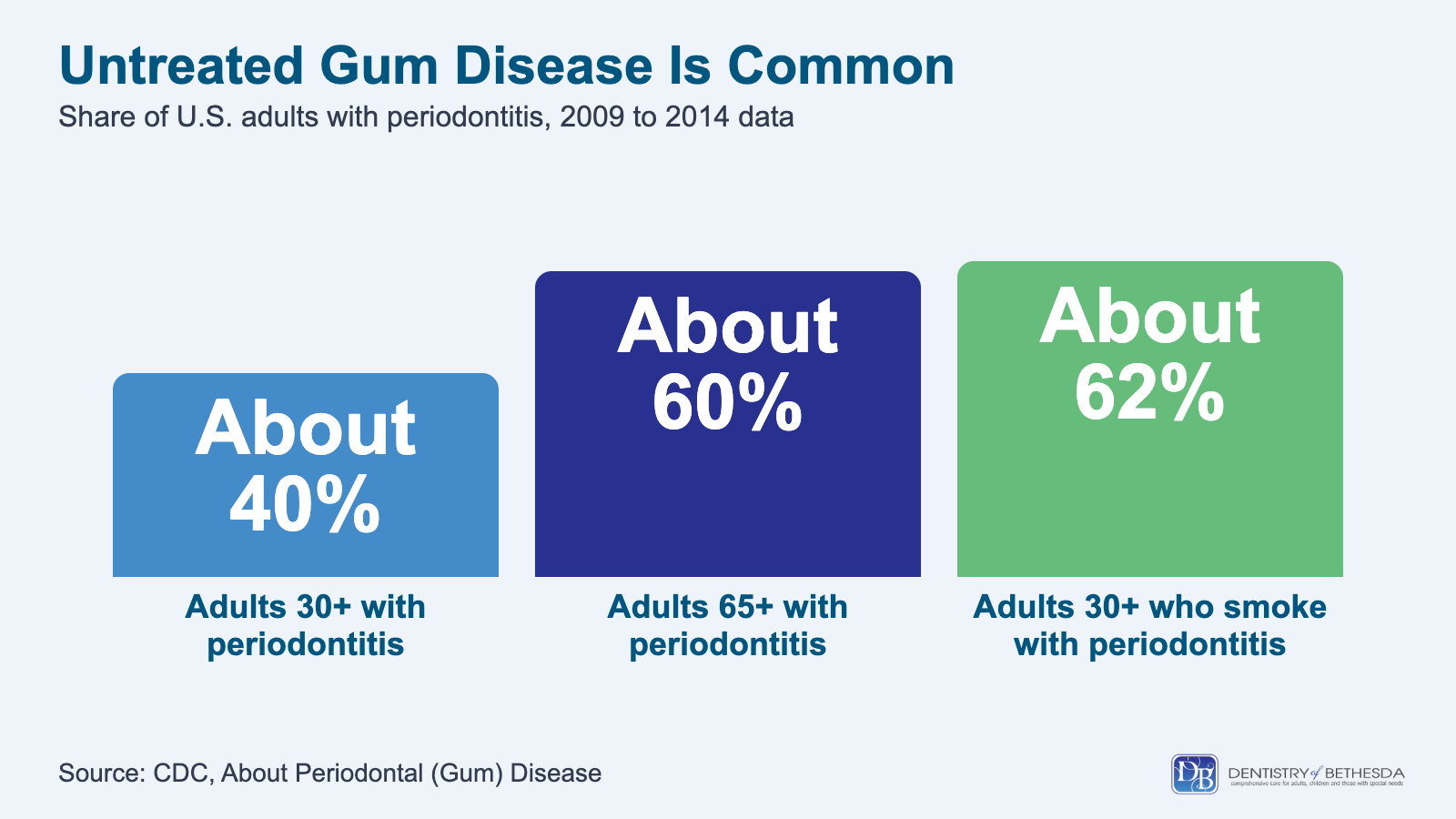
The chart above shows how common periodontitis is among adults.
How Long Does It Take Gingivitis to Turn Into Periodontitis?
No federal agency sets a fixed time for gingivitis to turn into periodontitis. The CDC says gingivitis can progress when it is left untreated, and gum disease can become serious before symptoms appear. A yearly dental checkup helps detect the change early.
What Is the Final Stage of Gingivitis?
Gingivitis has no final stage, because it is the first and mildest stage of gum disease. The next stage is periodontitis, which the CDC describes as damage to the tissues supporting the teeth. Healthy pockets measure 1 to 3 millimeters, according to NIDCR, while deeper pockets can signal periodontal disease.
Can Teeth Recover From Gingivitis?
Yes, teeth and gums can recover from gingivitis, because gingivitis is reversible. NIDCR says early gum disease caused by plaque buildup can often be reversed by daily brushing and flossing. Professional tartar removal is a first step.
A dentist can remove hardened buildup with a deep cleaning when tartar sits under the gum line.
How to Get Rid of Gingivitis Plaque?
Gingivitis plaque on teeth removal takes four steps, according to the ADA and NIDCR. Daily plaque control and a professional cleaning work together.
- Brush twice a day for two minutes with fluoride toothpaste, as the ADA advises.
- Angle the bristles toward the gumline so they clean where the gums meet the teeth.
- Clean between your teeth once a day with floss or an interdental brush.
- Book a professional cleaning so a dentist or hygienist removes tartar.
How Many Times a Day Should You Floss With Gingivitis?
Floss or clean between your teeth once a day if you have gingivitis. The ADA recommends cleaning between teeth daily. NIDCR advises curving the floss in a C shape around each tooth. Forcing floss into place could harm the gums.
Can I Reverse Gingivitis by Flossing?
Flossing helps reverse gingivitis when combined with brushing, but the evidence is low certainty. A 2019 Cochrane review of 8 trials with 585 adults found flossing plus toothbrushing may reduce gingivitis at one month. The reviewers noted the effect may not be clinically important.
How to Tell If Gingivitis Is Healing?
Healing gingivitis shows as gums that look less red and swollen and bleed less during brushing. The ADA and CDC name red, swollen, bleeding gums as the signs, so their fading marks improvement. A dentist confirms healing at a recheck, as part of gum health maintenance.
Why Won’t My Gingivitis Go Away?
Gingivitis does not go away when plaque keeps returning or tartar stays on the teeth. The CDC says brushing cannot remove tartar, so a professional cleaning is needed. Tobacco use also makes gum disease treatment less successful, according to NIDCR.
Some patients try home gum care first, but tartar needs professional removal.
What Is the Best Mouth Rinse for Gingivitis?
No single mouth rinse for gingivitis is best for every person, but therapeutic rinses with antimicrobial ingredients help. The ADA states that both chlorhexidine and essential oils can help control plaque and gingivitis. A rinse never replaces brushing and flossing.
The graphic below compares the best mouth rinse for gingivitis options the ADA and published reviews describe.
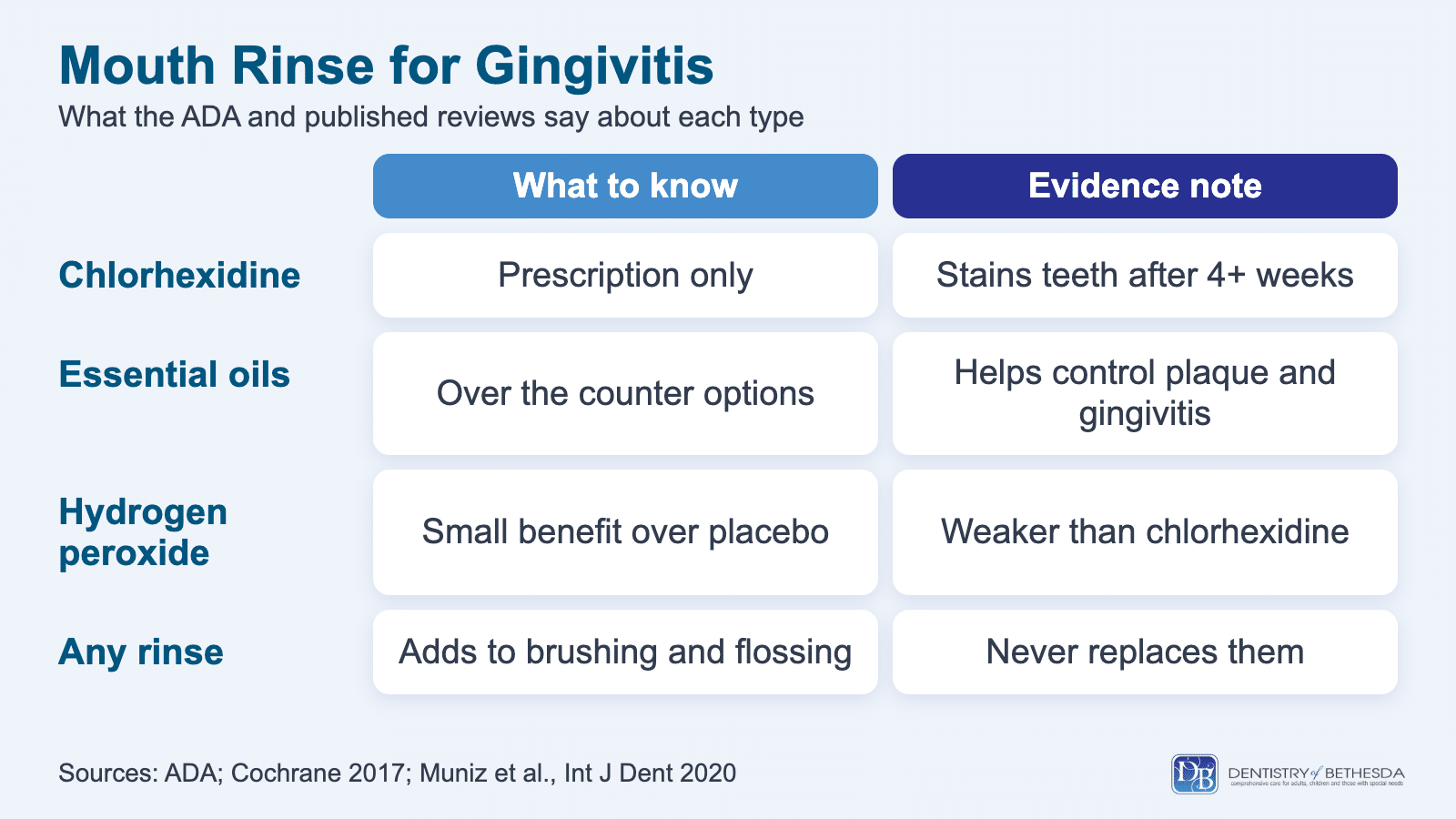
Chlorhexidine needs a prescription, according to the ADA. A 2017 Cochrane review of 51 trials covered 5,345 people. The review found chlorhexidine lowered gingival index scores by 0.21 after 4 to 6 weeks. Rinsing for four weeks or longer caused tooth staining.
The ADA says cetylpyridinium chloride may be added to reduce bad breath. The ADA also says children younger than 6 should not use mouthrinse unless a dentist directs it.
Does Hydrogen Peroxide Get Rid of Gingivitis?
Hydrogen peroxide rinsing helps slightly with gingivitis but does not get rid of it. A 2020 review in the International Journal of Dentistry covered 13 articles, mostly using 1.5% solutions. Hydrogen peroxide beat placebo for gingivitis, but chlorhexidine performed better.
What Kills Gingivitis Naturally?
Nothing kills gingivitis on its own, because removing plaque is what reverses it. NIDCR points to daily brushing and flossing, and the CDC points to professional cleanings. Check with a dentist before relying on a home rinse.
Can Gingivitis Affect Just One Area of the Mouth?
Gingivitis can affect one area of the mouth when plaque collects in one spot. NIDCR explains that plaque left in place irritates the gums around it. That is why gingivitis on one tooth can follow a spot the brush misses.
What Causes Gingivitis Around One Tooth?
Gingivitis around one tooth is caused by plaque or tartar collecting at that tooth. The CDC lists bite misalignment, clenching, and bruxism among associated risk factors. A dentist checks the tooth, its fillings, and the gum pocket depth.
Does Gingivitis Behind Front Teeth Need Different Care?
Gingivitis behind front teeth needs the same plaque removal as any other gingivitis. The tongue-side surfaces are easy to miss, so NIDCR advises angling bristles toward the gumline on every surface. Tartar there still needs a professional cleaning.
Can You Get Gingivitis on the Roof of the Mouth?
Gingivitis is inflammation of the gums, so gingivitis roof of mouth concerns usually involve the gum tissue behind the upper teeth. The CDC defines gingivitis as gum inflammation. Redness on the palate itself is a different matter, and a dentist should examine it.
What Else Should You Know About Gingivitis Plaque on Teeth?
What Foods Should You Avoid With Gingivitis?
No agency publishes a list of foods to avoid with gingivitis. The ADA explains that bacteria feed on food left in the mouth. Cleaning your teeth after meals and before bed limits that food supply.
What Is Mistaken for Gingivitis?
Periodontitis can be mistaken for gingivitis, because both cause red, bleeding gums. The CDC also notes that some medications cause oral side effects. A dentist measures pockets and checks the bone to give an accurate diagnosis.
What Do Doctors Prescribe for Gingivitis?
Dentists may prescribe an antimicrobial oral rinse for gingivitis. NIDCR says a dentist may discuss cleaning methods and prescribe an oral rinse. The ADA notes that chlorhexidine rinses are available only by prescription.
Does Smoking Make Gingivitis Worse?
Smoking raises gum disease risk, and NIDCR calls tobacco the most significant risk factor. The CDC reports that about 62% of adults 30 and older who smoke had periodontitis. Tobacco use can also delay healing and make treatment less successful.
How Do Dentists Check for Gingivitis?
Dentists check for gingivitis by examining the gums and measuring pockets with a small probe. NIDCR says pockets of 1 to 3 millimeters are healthy. Dentists also review medical history for risks such as tobacco use and diabetes.
Reviewing the gum disease signs helps you know when to book that exam.
Frequently Asked Questions
How to Clear Up Gingivitis Quickly?
Clear up gingivitis by removing all plaque and tartar as soon as possible. A professional cleaning removes tartar, and daily brushing and flossing remove plaque. The CDC and NIDCR give no fixed timeline for healing.
How Long Is Too Long for Gingivitis?
Gingivitis that lasts beyond a dental cleaning and consistent home care is too long. Persistent bleeding or swelling needs a dentist visit, because the CDC says untreated gingivitis can progress to periodontitis.
Can Gingivitis Ever Go Away?
Yes, gingivitis goes away when plaque and tartar are removed and daily cleaning continues. The CDC calls it reversible. Gingivitis can return if plaque builds up again.
What Kills Plaque and Gingivitis?
Brushing, cleaning between teeth, and professional cleanings remove plaque, which reverses gingivitis. The ADA adds that therapeutic rinses can help reduce plaque and gingivitis when combined with daily brushing and flossing.
Can People Smell My Gingivitis?
People may notice breath odor from gingivitis, since persistent bad breath is a sign of gum disease, according to the ADA. A dentist can identify the cause and recommend care.
How Does Dentistry of Bethesda Help With Gingivitis Plaque on Teeth?
We help with gingivitis plaque on teeth through exams, professional cleanings, and gum care plans. Dr. Spencer Hornstein measures gum pockets, removes tartar, and shows you how to clean between teeth.
Patients with persistent gum inflammation can start gum therapy to stop gum disease from advancing.
Our hygienists remove tartar from every tooth surface, review brushing technique, and explain how to clean between teeth. Each visit ends with a clear plan for the home care routine that suits your mouth.
You can make an appointment to have your gums checked and your teeth cleaned.
Dr. Hornstein reviews every finding with you in plain terms, answers your questions, and sets the next visit before you leave. Each plan fits your gum health, your schedule, and your comfort.
Patients with special health needs receive the same careful, unhurried exam. The team adjusts each visit to the way you prefer to be cared for. See Dr. Hornstein’s office for details on the practice.