

Bad breath clears when the bacteria that cause it are removed. About 85% of cases start in the mouth, according to a 2012 clinical review. Brush twice a day for two minutes, clean between teeth daily, and clean the tongue. Tongue coating alone accounted for 43% of cases in one 2,000-patient evaluation. Odor that stays after these steps needs a dental exam for gum disease, dry mouth, or infection.
Key Takeaways
- About 85% of halitosis cases originate in the oral cavity (Bollen and Beikler, 2012).
- Tongue coating was the most common cause in a 2,000-patient clinical evaluation, at 43%.
- Mouthwash and mints cover odor for a short time and do not treat the cause.
- Stomach disorders rarely cause bad breath, according to the MSD Manual.
- Persistent odor, a constant bad taste, or fever with face pain calls for a dentist or doctor.
How to Get Rid of Bad Breath at Home?
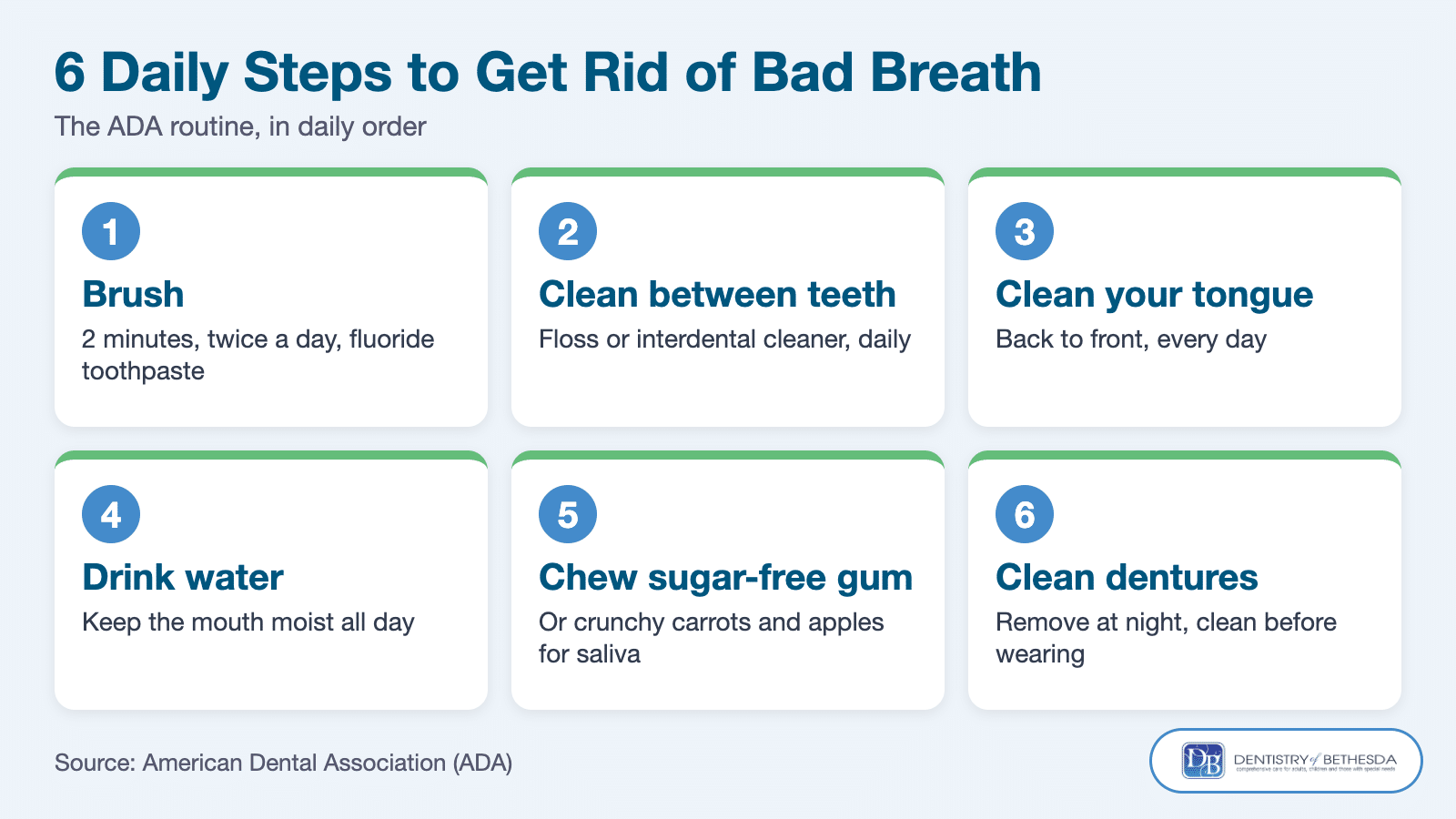
How to get rid of bad breath at home starts with a daily six-step routine that removes bacteria and keeps saliva flowing. The American Dental Association (ADA) advises brushing twice a day with fluoride toothpaste for two minutes. Cleaning between teeth once a day removes the debris that a brush cannot reach.
- Brush for two minutes, twice a day, with fluoride toothpaste.
- Clean between your teeth once a day with floss or an interdental cleaner.
- Clean the top of your tongue from back to front.
- Drink water through the day to keep your mouth moist.
- Chew sugar-free gum or crunchy foods such as carrots or apples to stimulate saliva, as the ADA suggests.
- Take out removable dentures at night and clean them before wearing them again, as the ADA advises.
The graphic below shows the six steps in daily order.
We offer a bad breath evaluation when home care does not clear the odor, so the source can be found and treated.
Does Tongue Scraping Help Bad Breath?
Tongue scraping helps bad breath by removing the coating where odor-causing bacteria live. Bollen and Beikler (2012) call the tongue surface an ideal niche for bacteria, because dead cells and food debris collect there. The surface measures about 25 square centimeters.
The same review cites a 2006 Cochrane review of tongue cleaning. That review found weak, unreliable evidence of a small drop in sulfur compounds when scrapers were used instead of toothbrushes. Either tool works when it reaches the back of the tongue.
Which Mouthwash Helps With Bad Breath?
A mouthwash for bad breath works only for a short time, according to the ADA. Over-the-counter rinses can kill bacteria or neutralize odor, but the ADA calls the effect temporary. MedlinePlus adds that mouthwashes are not effective for treating the underlying problem.
A Cochrane review of mouthrinses covered five randomized trials with 293 participants. Bollen and Beikler report that a rinse with chlorhexidine, cetylpyridinium chloride, and zinc lactate lowered odor scores compared with placebo. The same rinse caused more tongue and tooth staining.
How to Stop Bad Breath in the Morning?
How to stop bad breath in the morning starts with a full cleaning routine before bed. Bollen and Beikler explain that saliva production falls during the night, so bacteria break down debris faster. That change produces the typical morning breath.
Brushing, cleaning between teeth, and cleaning the tongue at night leave less debris for those bacteria. Drinking water on waking moistens the mouth again. Mouth breathing can dry the mouth, according to the ADA, so a dentist should check dry mouth that persists.
What Causes Bad Breath Even After Brushing?
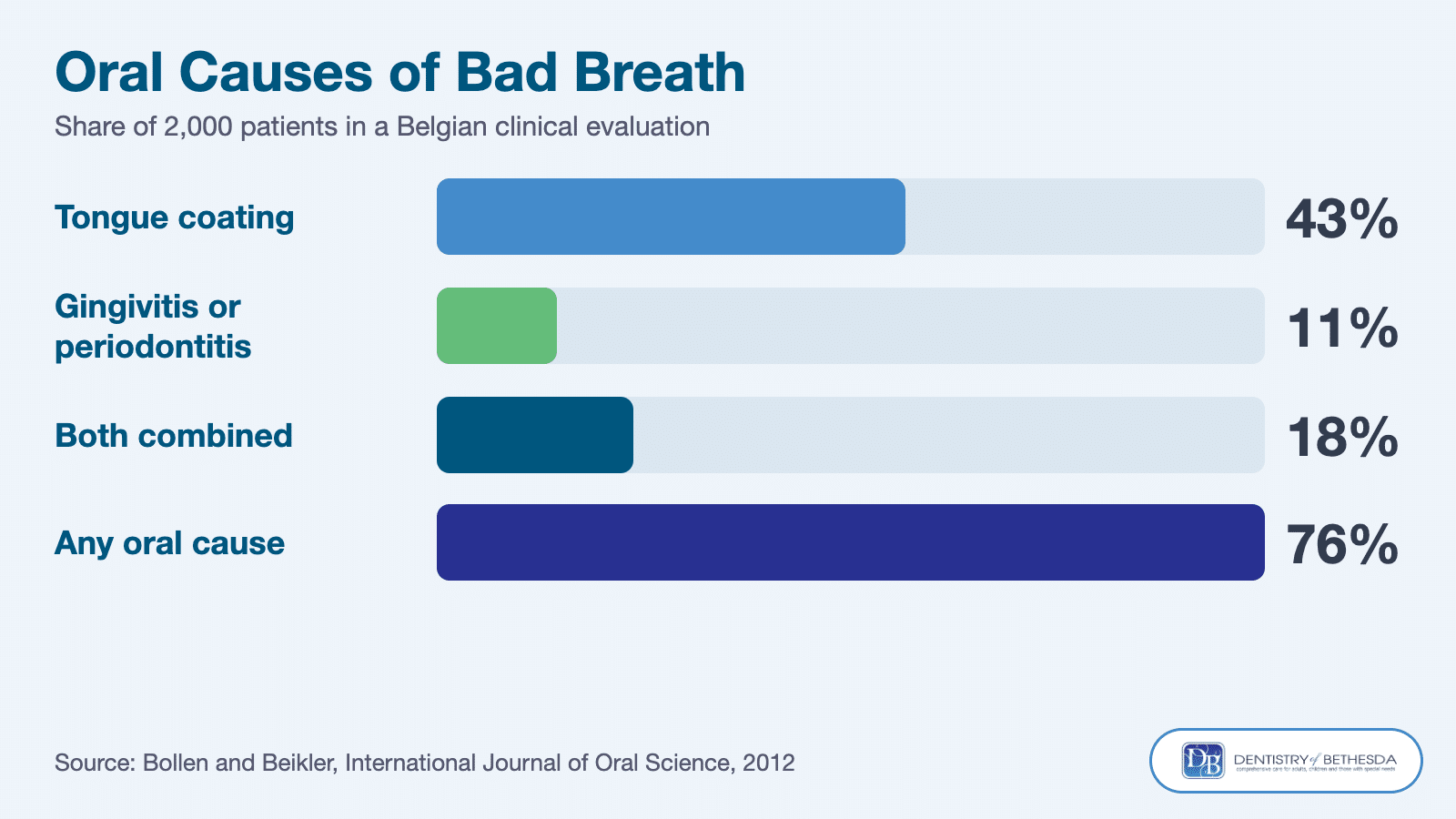
What causes bad breath even after brushing is usually bacteria on the tongue and below the gumline. A toothbrush alone does not clear them. In a clinical evaluation of 2,000 patients in Belgium, 76% had oral causes. Bollen and Beikler report the split in the table below.
The chart below shows the same figures as bars. Daily cleaning and checkups are central to preventing gum disease, one of the two oral causes in the table.
Why Does My Breath Smell Even When I Brush?
Your breath smells even when you brush because brushing misses the tongue and the spaces between teeth. Food odors can also reach the breath through the bloodstream. The MSD Manual states that garlic odor can be smelled 2 or 3 hours after eating. Oral hygiene cannot remove it.
Dry mouth is another cause. The National Institute of Dental and Craniofacial Research (NIDCR) states that hundreds of medicines can reduce saliva. Less saliva means less rinsing of food particles from teeth and gums.
What Is the #1 Cause of Bad Breath?
The #1 cause of bad breath is tongue coating, found in 43% of 2,000 Belgian patients. Bollen and Beikler call it the most common cause. Bacteria on the tongue break down cells and food remnants into sulfur gases.
Hydrogen sulfide and methyl mercaptan make up about 90% of these sulfur gases, according to a 2023 Frontiers in Oral Health review. The MSD Manual lists tongue bacteria, periodontal disease, foods, and tobacco as the most common causes.
Can Gum Disease Cause Bad Breath?
Yes, gum disease can cause bad breath because bacteria in deep gum pockets release sulfur compounds. Bollen and Beikler report that pocket depth correlates with the concentration of sulfur compounds in the mouth. Deeper pockets mean stronger odor.
Gum treatment removes the bacteria and buildup that feed the odor. Our gum treatment addresses pockets that home cleaning cannot reach. Bollen and Beikler note that most of the microorganisms behind halitosis are also involved in periodontitis.
What Are Two Signs of Gum Disease?
Two signs of gum disease are bad breath that will not go away and a constant bad taste, according to the ADA. The ADA calls these a warning sign of advanced gum disease, while gums that bleed during brushing call for bleeding gum care. Plaque, a sticky film of bacteria, causes the disease.
Other gum disease symptoms include gum changes that a dentist can see during an exam.
Can You Smell Your Own Bad Breath?
You generally cannot judge your own bad breath reliably, and smoking lowers your sense of smell, according to the ADA. Smokers may not notice how their breath smells. Self-judgment also fails in the other direction.
The MSD Manual describes psychogenic halitosis, where a person believes the breath smells bad when it does not. A trusted person or a dentist gives a more reliable answer than a sniff test.
How Do You Smell Your Own Breath at Home?
You can check your breath at home by smelling the material removed from your tongue. The MSD Manual lists unpleasant-smelling tongue scrapings as a feature of bacteria on the back of the tongue. A clean tongue with no odor points away from that cause.
A second check is to ask a trusted person. A dental exam confirms the cause, since the MSD Manual notes that a dentist’s examination identifies gum and tooth sources.
How to Get Rid of Bad Breath Permanently?
How to get rid of bad breath permanently means treating the cause, because masking products cover odor for a short time. The ADA calls mouthwash a temporary solution. The table below matches each cause with its sign and the professional who treats it.
Each row in the table calls for a different fix, so the cause must come first. Professional care for halitosis care starts with that exam.
Denture wearers need one more check. MedlinePlus lists dentures among the causes of breath odor, and the ADA advises cleaning them daily. Poor fit or worn appliances call for a review by a dentist.
The ADA also advises regular dental visits so a dentist can catch gum disease or dry mouth early. A dental hygiene visit removes plaque that home cleaning leaves behind. When the mouth is healthy, the ADA says a dentist may refer you to a primary care doctor.
When Does Bad Breath Signal a Dental or Medical Problem?
Bad breath signals a dental or medical problem when odor stays after consistent cleaning. MedlinePlus advises contacting a provider when odor persists without an obvious cause, such as smoking or odorous food. The next sections cover the stomach and body conditions.
How to Get Rid of Bad Breath From the Stomach?
How to get rid of bad breath from the stomach starts with a dental exam, because stomach disorders rarely cause bad breath. The MSD Manual explains that the esophagus is normally collapsed, so stomach gases do not reach the mouth. Bad breath is not a sign of poor digestion.
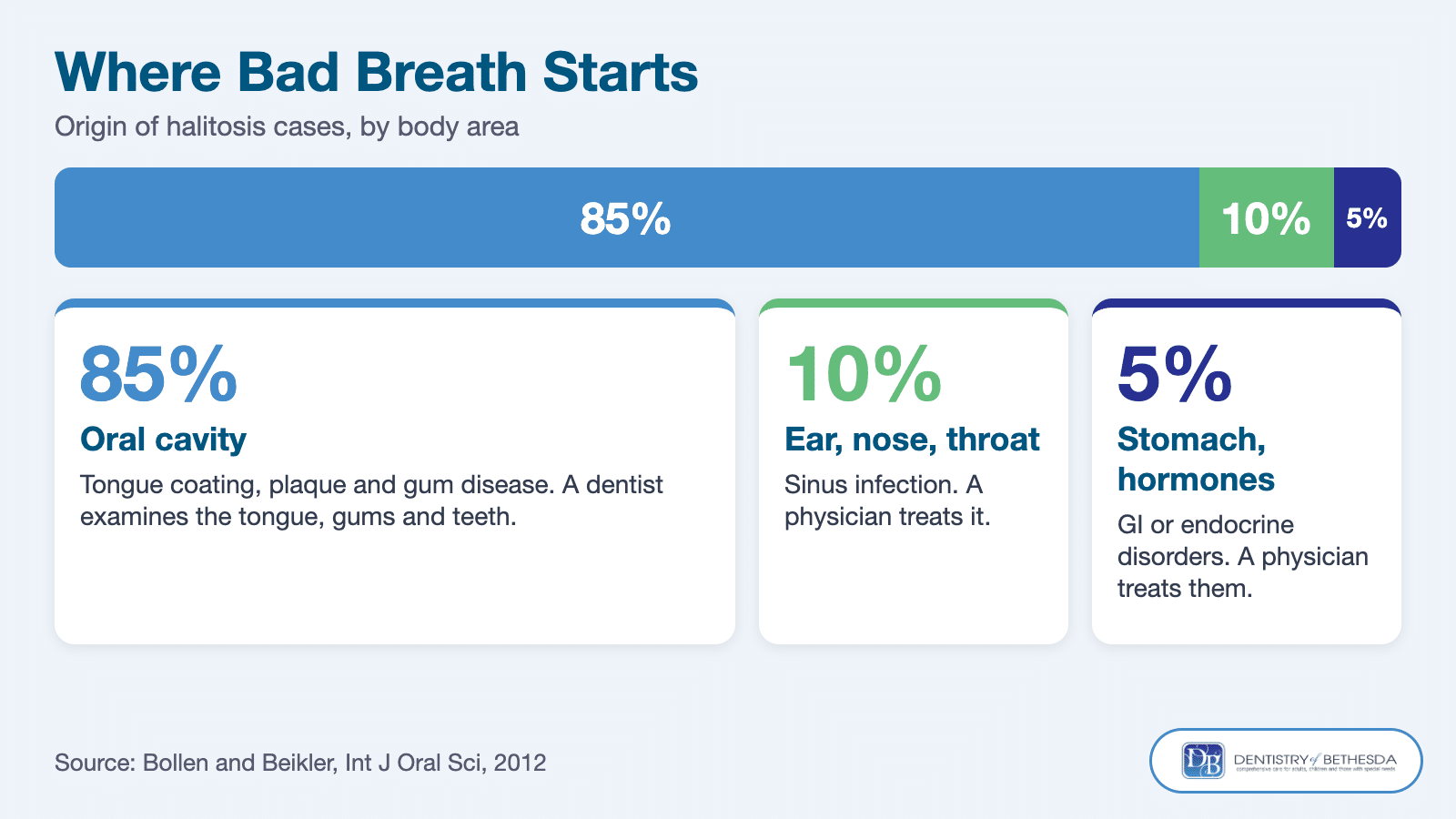
Bollen and Beikler report that ear, nose, and throat disorders contribute in 10% of cases and gastrointestinal or endocrine disorders in 5%. The MSD Manual names gastroesophageal reflux disease (GERD), stomach cancer, and a rare esophageal pouch called Zenker diverticulum as possible exceptions.
The graphic below compares the 85% oral share with the 10% and 5% shares from outside the mouth.
Which Medical Conditions Cause Bad Breath?
Kidney failure, liver failure, and uncontrolled diabetes can change the odor of the breath. The MSD Manual states that kidney failure gives a urine or ammonia smell, and liver failure gives a musty, sweet smell. Severe uncontrolled diabetes gives a nail polish remover smell.
MedlinePlus calls a fruity breath odor a sign of ketoacidosis, which can be life-threatening in people with diabetes. That odor needs urgent medical care, not a dental visit.
When Should You See a Dentist or Doctor for Bad Breath?
You should see a dentist first when bad breath persists, and a doctor if the mouth is healthy. The ADA advises this order. Booking regular exams catches gum disease and dry mouth early.
The following signs call for prompt attention.
- Breath odor that does not go away and has no obvious cause, per MedlinePlus.
- Breath odor with fever, cough, or face pain with nasal discharge, per MedlinePlus.
- A constant bad taste with gum changes, per the ADA.
- A fruity breath smell in a person with diabetes, per MedlinePlus.
What Else Should You Know About Bad Breath?
What Drink Kills Bad Breath Fast?
Water is the drink that helps bad breath fastest, because it moistens the mouth and rinses debris. NIDCR explains that saliva washes food particles from teeth and gums. No drink removes tongue bacteria. The MSD Manual lists alcoholic beverages among common causes of odor.
What Food Cancels Out Bad Breath?
No food cancels out bad breath for good, but crunchy foods stimulate saliva. The ADA suggests carrots or apples. MedlinePlus says fresh parsley or a strong mint can fight temporary bad breath. Garlic odor from the bloodstream, however, outlasts any mint.
How to Hide Bad Breath While Talking?
To hide bad breath while talking, chew sugar-free gum or use a mint. MedlinePlus says mouthwashes, mints, and gum may make breath fresher, and the ADA says sugar-free gum helps saliva flow. These methods mask odor for a short time and do not treat the cause.
What Vitamin Are You Lacking If You Have Bad Breath?
No missing vitamin is named as a cause of bad breath in MedlinePlus or the ADA. MedlinePlus lists vitamin supplements, especially in large doses, as a possible cause of breath odor. A dentist or doctor can review supplements and medicines.
Frequently Asked Questions
How Long Does Garlic Breath Last?
Garlic breath can last 2 or 3 hours after eating, according to the MSD Manual. The odor passes from the bloodstream into the lungs, so brushing cannot remove it.
How Do Dentists Get Rid of Bad Breath?
Dentists get rid of bad breath by finding and treating the cause. For gum disease, Bollen and Beikler report that scaling and root planing with chlorhexidine improved bacterial counts for up to 2 months.
Can Dentures Cause Bad Breath?
Yes, dentures can cause bad breath when they are not cleaned. MedlinePlus lists dentures among causes, and the ADA advises removing dentures at night and cleaning them each morning.
Does Smoking Cause Bad Breath?
Yes, smoking causes bad breath, and tobacco users are more likely to have gum disease, according to the ADA. The MSD Manual states that bad breath is more common among smokers.
Is Bad Breath Common?
Yes, bad breath is common, because 50% of adults have had it at some point, according to the ADA.
Can Dry Mouth Cause Bad Breath?
Yes, dry mouth can cause bad breath because less saliva means less rinsing. The ADA lists medications, salivary gland problems, and mouth breathing as causes of dry mouth.
How Does Dentistry of Bethesda Help With Bad Breath?
Dentistry of Bethesda helps with bad breath by examining the tongue, gums, and teeth for the source, then treating the cause. Dr. Hornstein’s team offers breath treatment once the cause is clear. A visit can include several checks.
- An exam of the gums and teeth for gum disease and decay.
- A look at the tongue for coating.
- A review of dry mouth and the medicines that cause it.
- A referral to a physician when the mouth is healthy.
You can request an appointment for a bad breath exam. Bring a list of your medicines and supplements to the visit. The dentist uses that list to check for dry mouth and other medicine-related causes of odor.
We welcome every patient into Dr. Hornstein’s care.