

Veneers last 10 to 15 years with proper care, according to Cleveland Clinic. Porcelain veneers can last longer, with 82.93% of 318 porcelain veneers still in service at 20 years in an Austrian university study. Composite veneers wear faster, with 52% of direct composite veneers surviving 10 years. Grinding, hard foods, and missed dental visits shorten that range.
Key Takeaways
- The answer to “how long do veneers last” is 10 to 15 years with proper care, according to Cleveland Clinic.
- Porcelain veneers had 93.5% survival at 10 years and 82.93% at 20 years in the Innsbruck study.
- Direct composite veneers had 85% survival at 5 years and 52% at 10 years in a 2019 practice study.
- Veneers do not actively damage teeth, but the enamel removed for placement does not grow back.
- Grinding raised veneer failure risk 7.7 times, so a night guard protects the investment.
How Long Do Veneers Last?
Veneers last 10 to 15 years with proper care, according to Cleveland Clinic. The ADA states that a veneer may chip, crack, wear down, or loosen over time. Material, bite forces, and daily habits decide where a single veneer falls inside that range.
The ADA names porcelain and composite as the two main veneer types. Dr. Hornstein’s team offers veneer treatment only after an exam confirms healthy teeth and gums, as the ADA advises. Each material has its own survival record, starting with porcelain.
How Long Do Porcelain Veneers Last?
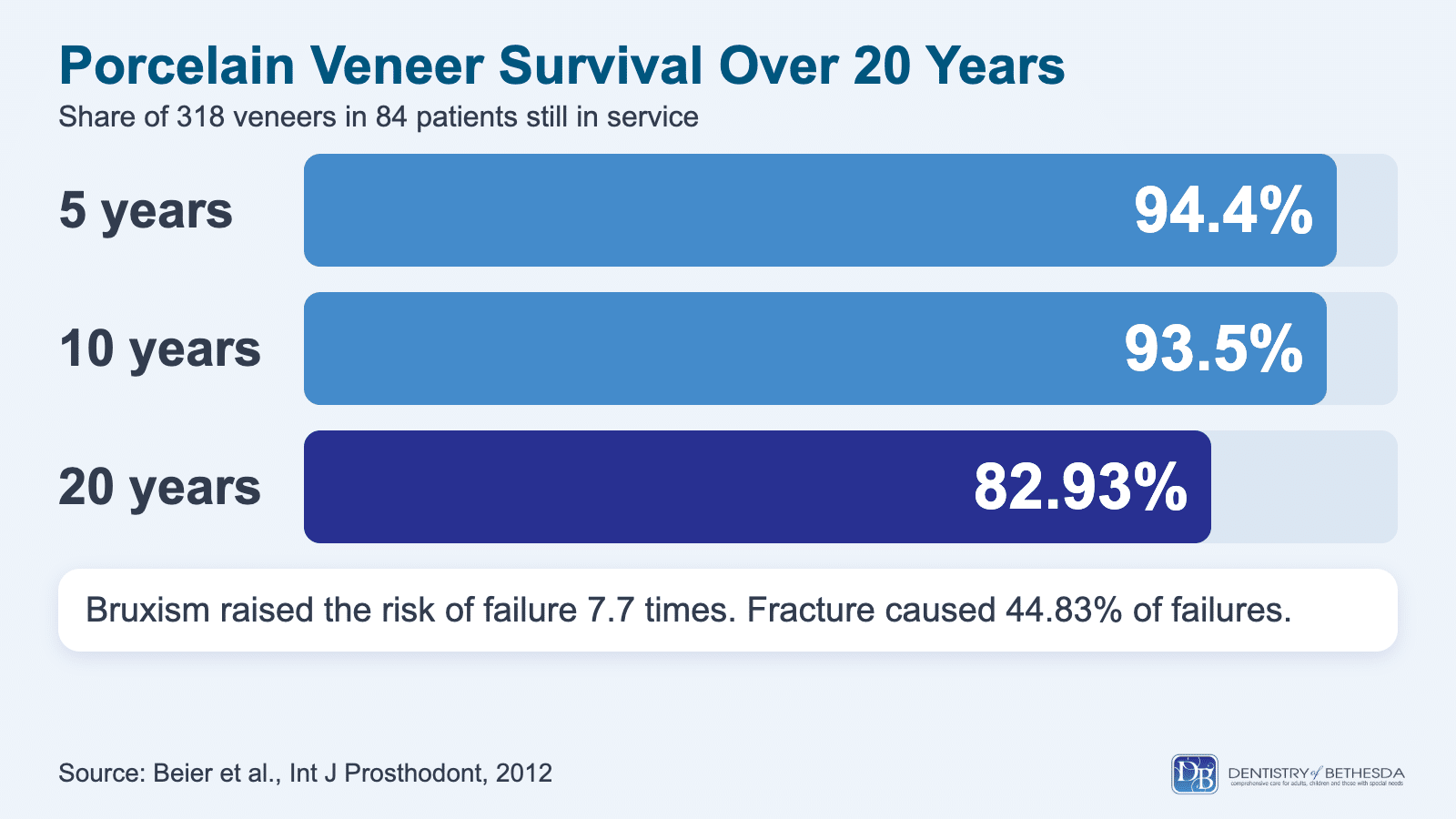
Porcelain veneers last 10 to 15 years, and in a 20-year Austrian study 82.93% were still in service at 20 years. Researchers at Medical University Innsbruck followed 318 porcelain veneers in 84 patients (Beier et al., 2012). Survival was 94.4% at 5 years and 93.5% at 10 years.
Other reviews show a wider spread. Layton and colleagues found feldspathic porcelain veneers survived at 95.7% after 5 years. Their 10-year survival ranged from 64% to 95% across three studies. A 2016 meta-analysis of 13 studies reported 89% overall survival over a median 9 years.
The chart below shows the Innsbruck survival figures at 5, 10, and 20 years.
The table compares three clinical sources on porcelain veneer survival.
Fracture and chipping were the most frequent complication in the 2016 review, at 4%.
How Long Do Composite Veneers Last?
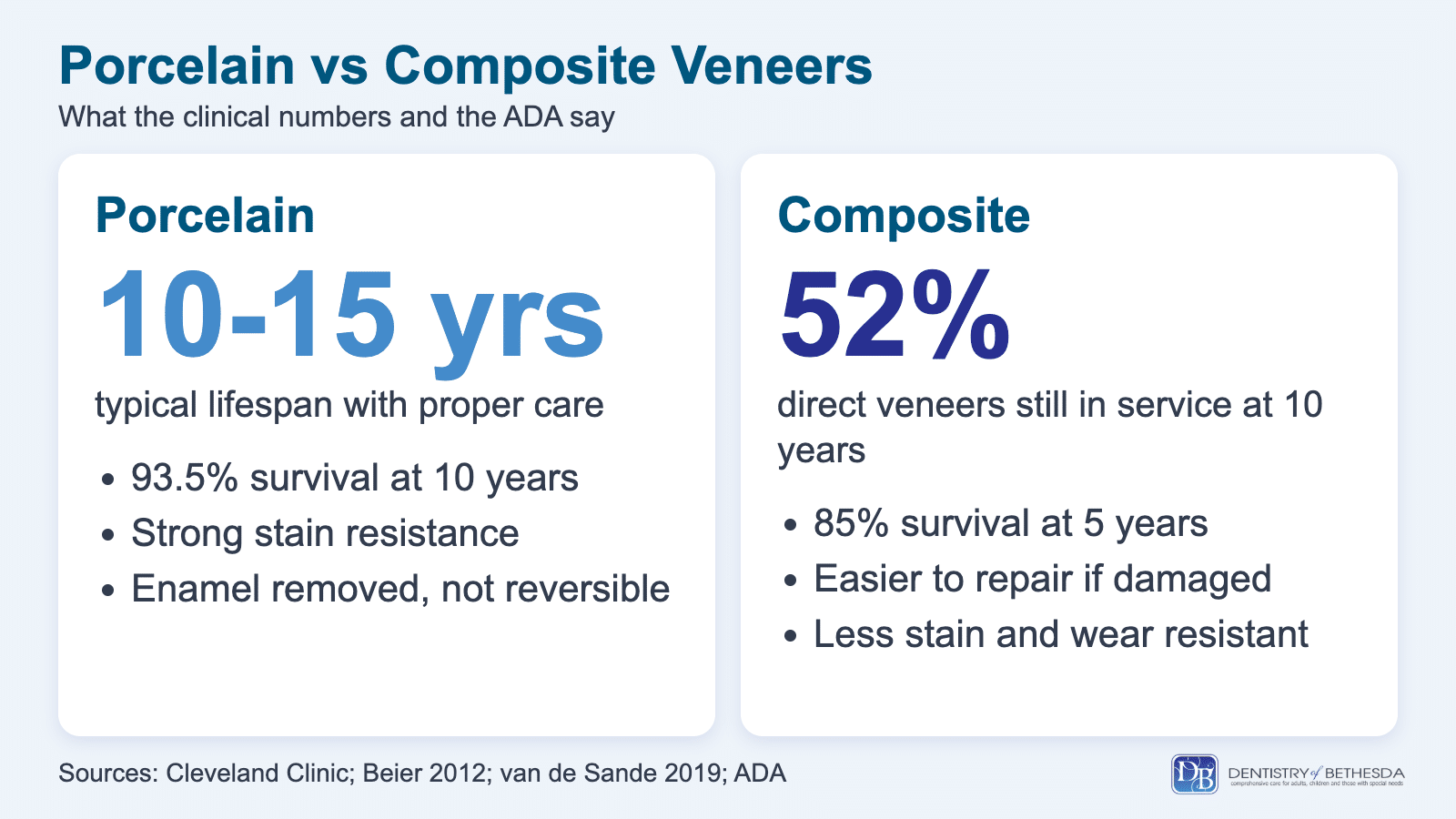
Composite veneers last a shorter time than porcelain, with 52% of direct composite veneers surviving 10 years in a long-term practice study. The 2019 study in Clinical Oral Investigations tracked anterior composite restorations for up to 15 years. Direct veneers had 85% survival at 5 years.
The study also counted repairs as failures. Survival then fell to 74% at 5 years and 38% at 10 years. The ADA notes composite veneers are easier to fix but not as stain- or wear-resistant. A 2018 review called composite a conservative option with less durability.
The table below sets the two materials side by side using the ADA, Cleveland Clinic, and study figures.
The graphic below shows the same comparison in one view.
Can Veneers Last Forever?
No, veneers cannot last forever, because every veneer is a restoration that can wear, chip, or loosen, according to the ADA. The Innsbruck study fell from 93.5% survival at 10 years to 82.93% at 20 years. A worn veneer may need a dentist to re-bond, repair, or replace it.
What Happens to Veneers After 10 Years?
Veneers after 10 years remain in service for 93.5% of porcelain veneers in the Innsbruck study. Edge discoloration is the change to watch. Petridis and colleagues found marginal discoloration was the most frequent complication, at 9% after 5 years. Cleveland Clinic notes veneers resist staining better than natural enamel.
What Happens After 20 Years of Veneers?
After 20 years of veneers, 82.93% of porcelain veneers were still in service in the Innsbruck study. Fracture of the ceramic caused 44.83% of the failures. Teeth without a live nerve showed a significantly higher failure risk.
Dentists check older veneers for chips, loose edges, and decay on the natural tooth. A regular checkup schedule gives the dentist those looks at each visit.
Do Veneers Damage Your Teeth?
No, veneers do not actively damage your teeth, according to Cleveland Clinic. The ADA adds that veneer treatment is not reversible because dentists remove a small amount of enamel. Dentists weigh that permanent change before recommending veneers.
Cleveland Clinic names three tradeoffs. Patients lose some natural enamel, gain sensitivity to heat and cold, and may see a veneer fall off.
Do Veneers Ruin Your Teeth?
Veneers do not ruin your teeth when the teeth are healthy at the start and the veneers are cared for. Treating decay and gum disease first is the ADA rule, because veneers over unhealthy teeth may worsen existing problems. A 2016 meta-analysis called ceramic veneers a safe option that preserves tooth structure.
Are Teeth Rotting Under Veneers?
Teeth do not rot under veneers when daily care continues. Cleveland Clinic warns that decay can still form on the natural tooth underneath. Secondary decay occurred in 1% of ceramic veneers in the 2016 meta-analysis.
Do Veneers Cause Problems Later in Life?
Veneers can cause five documented problems later in life, according to the 2016 meta-analysis by Morimoto and colleagues. The list below gives the rate for each complication.
- Fracture or chipping: 4%
- Debonding: 2%
- Endodontic (nerve) problems: 2%
- Severe marginal discoloration: 2%
- Secondary caries: 1%
Beier and colleagues found nonvital teeth had a significantly higher failure risk, so dentists check tooth health first.
What Happens When Veneers Wear Out?
When veneers wear out, the dentist re-bonds, repairs, or replaces them, according to the ADA. Chips, cracks, wear, and loosening are the changes the ADA lists. The signs below tell a patient when to call.
What Are the Signs That Veneers Need Replacing?
Signs that veneers need replacing are visible damage, looseness, bite changes, sensitivity, and edge staining. The list below names six signs to report to a dentist.
- A visible chip or crack
- A veneer that feels loose
- A bite that no longer feels right
- New sensitivity to hot or cold
- A dark line or stain at the veneer edge
- Pain or roughness at the gumline that suggests decay
Can a Veneer Be Taken Off and Put Back On?
A veneer that comes loose can be re-bonded by a dentist, according to the ADA, which lists re-bonding alongside repair and replacement. Cleveland Clinic states dentists bond porcelain veneers permanently with dental cement. Removal is therefore a dental procedure and not a home task.
How Can You Make Veneers Last Longer?
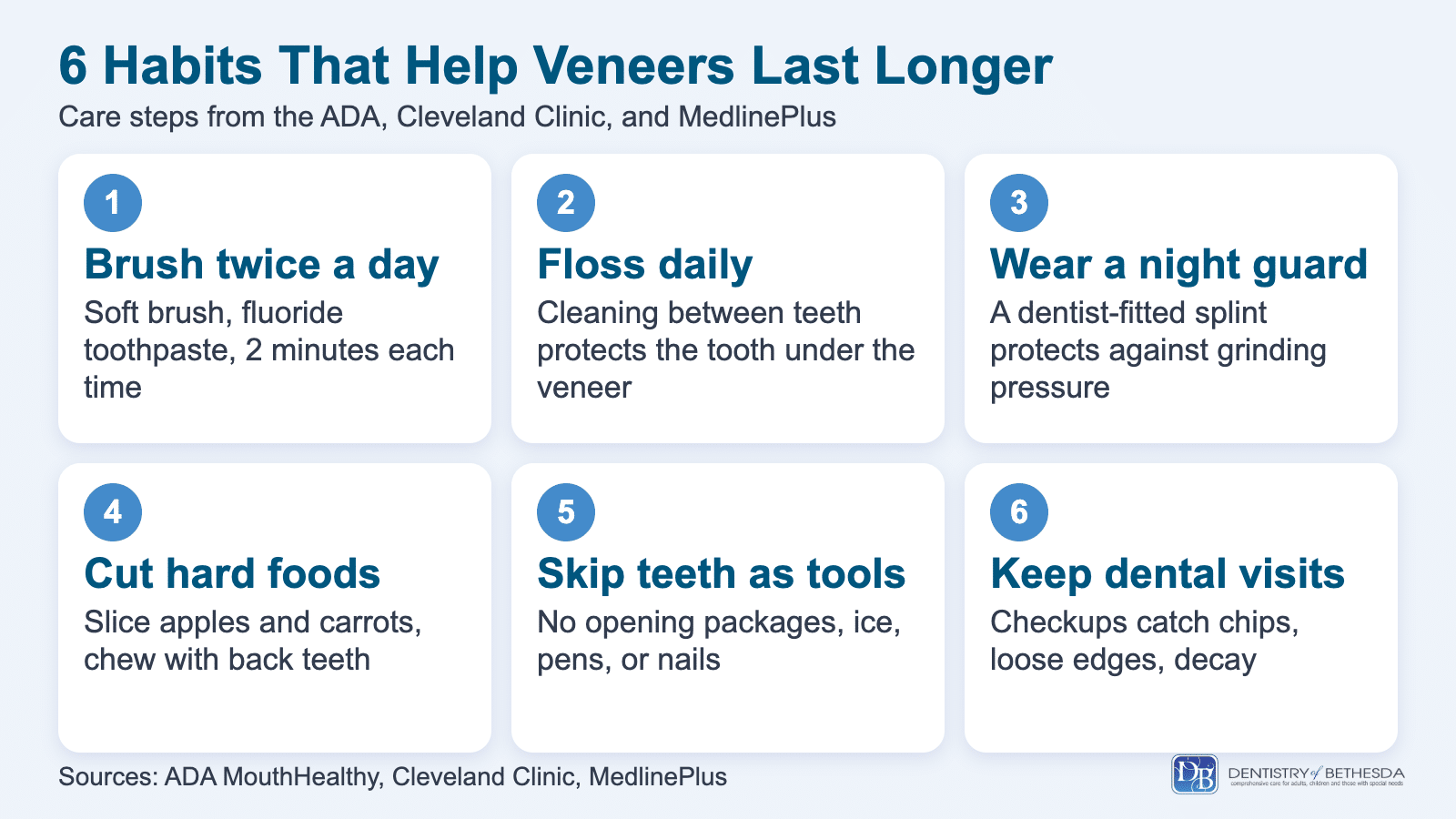
You can make veneers last longer with six daily habits from the ADA, Cleveland Clinic, and MedlinePlus. Knowing how to make veneers last longer starts with the steps below. They protect both the veneer and the natural tooth under it.
- Brush twice a day for 2 minutes with a soft-bristled brush and fluoride toothpaste.
- Clean between the teeth every day.
- Wear a dentist-fitted night guard for grinding and a mouthguard for contact sports.
- Cut apples, carrots, and tough meats into pieces and chew with the back teeth.
- Never use teeth as tools to open packages or tear tags.
- Keep regular dental visits.
The graphic below summarizes the six habits.
Does Teeth Grinding Shorten the Life of Veneers?
Teeth grinding shortens the life of veneers, and the Innsbruck study found a 7.7 times greater risk of failure with bruxism. Bruxism is the medical term for grinding or clenching. Manfredini and colleagues report sleep bruxism in 12.8% of adults and awake bruxism in 22.1% to 31%, by self-report.
MedlinePlus states that mouth guards or splints may protect teeth from grinding pressure. Dr. Hornstein’s office provides bruxism care for patients who grind or clench.
Of the 84 Innsbruck patients, 42 had a bruxism diagnosis. The study measured failure risk for those patients against patients without the habit.
The ADA states veneers may not be a good choice for people who clench or grind. Patients with existing wear can read how dentists treat grinding damage to teeth.
Can You Bite Into an Apple With Veneers?
Yes, you can eat an apple with veneers when the apple is sliced first. Cleveland Clinic advises against biting directly into hard or crunchy foods like apples, carrots, and tough meats. The clinic recommends cutting these foods and chewing them with the back teeth.
Can I Use an Electric Toothbrush If I Have Veneers?
Yes, you can use an electric toothbrush if you have veneers, because the ADA states manual and powered brushes clean equally well. Choose soft bristles, since the ADA warns firm or medium bristles may damage gums and enamel. Replace the brush every three to four months.
Can You Whiten Veneers?
No, you cannot whiten veneers, because the ADA states whitening will not work on veneers, caps, crowns, or fillings. Cleveland Clinic adds that whitening products can scratch veneers. The dentist picks a veneer shade to match natural teeth, so patients who want whiter teeth discuss teeth whitening before placement.
What Disqualifies You From Veneers?
Untreated decay and gum disease disqualify you from veneers until a dentist treats them, according to the ADA. Clenching, grinding, or a deep overbite may make veneers a poor choice. Cleveland Clinic requires teeth free of extensive cavities and gum disease.
The list below names the conditions that change veneer planning.
- Extensive cavities
- Gum disease
- Clenching or grinding
- A deep overbite
- Teeth badly damaged by decay or trauma
Cleveland Clinic states that crowns restore teeth badly damaged by decay or trauma. Patients with that damage compare crown options with veneers.
What Else Should You Know About Veneer Lifespan?
Are Crowns or Porcelain Veneers Better?
Crowns are better for badly damaged teeth, and porcelain veneers suit cosmetic changes to the front surface. A veneer covers only the front surface of a tooth, per Cleveland Clinic. A crown covers the entire tooth to add strength and protection.
Dr. Hornstein’s team places porcelain veneers for chips, gaps, and stains that whitening does not improve.
What Do Dentists Recommend Instead of Veneers?
Dentists recommend whitening for stains, bonding for mild flaws, and crowns for badly damaged teeth. Cleveland Clinic lists stains that do not improve with whitening as a veneer use.
Cleveland Clinic states composite veneers use the same material as dental bonding, which conceals mild cosmetic issues. The right option depends on the tooth.
Can You Veneer Just One Tooth?
Yes, you can veneer just one tooth, and the dentist matches the veneer shade to the neighboring natural teeth. The ADA states each process includes picking a shade to match natural teeth. Cleveland Clinic lists chipped or broken teeth among the reasons for veneers.
Are Veneers Painful to Get?
Getting veneers involves no downtime, according to Cleveland Clinic. Patients return to normal activities the same day and can eat once anesthesia wears off. The ADA adds that it may take a few days to get used to a veneer.
Frequently Asked Questions
What Are the Negatives of Veneers?
The negatives of veneers, per Cleveland Clinic, are enamel loss, limited reversibility, heat and cold sensitivity, and possible dislodging.
Why Do Dentists Advise Against Veneers?
Dentists advise against veneers when decay or gum disease is present, according to the ADA. The ADA also says clenching or grinding may make veneers a poor choice. Treatment is not reversible, so dentists review the decision with each patient.
What I Wish I Knew Before Getting Veneers?
Before getting veneers, know that treatment is not reversible, according to the ADA. Veneers may need re-bonding, repair, or replacement over time. Daily brushing and dental visits still protect the tooth underneath.
Do You Have to Get Veneers Redone Every 10 Years?
No, you do not have to get veneers redone every 10 years. Cleveland Clinic gives a range of 10 to 15 years. In the Innsbruck study, 93.5% of porcelain veneers were in service at 10 years. A dentist judges each veneer by its condition.
Do Veneers Usually Look Fake?
No, veneers blend in with natural teeth for lifelike results, according to Cleveland Clinic. The ADA states each process includes picking a color shade to match natural teeth.
What Is a Cheaper Option Than Veneers?
Composite veneers are the less expensive option, because the ADA says porcelain tends to be the more expensive one. Composite veneers are easier to fix but not as stain- or wear-resistant.
How Does Dentistry of Bethesda Help With Veneers?
We help with veneers by checking the teeth, gums, and bite before any treatment, as the ADA advises. Dr. Hornstein reviews decay, gum health, and grinding habits first. Patients who search “how long do veneers last” get the sourced ranges in this article applied to their own teeth.
Patients can book a veneer consultation to compare porcelain and composite for their smile.
The consultation covers tooth condition, bite, grinding habits, and the material choice. Dr. Hornstein explains the expected lifespan from the studies cited above and the care routine that protects the result.
Completed cosmetic cases appear in the smile gallery.
Patients with questions about veneer care, warning signs, or replacement can call the office. The team answers questions about each step, from first exam to long-term checkups, and explains how daily habits affect results.
Questions are welcome at Dr. Hornstein’s clinic.